![[personal profile]](https://www.dreamwidth.org/img/silk/identity/user.png)
Workers Push to Rename Wexner Center for the Arts Over Epstein Ties
May. 22nd, 2026 06:43 pm![[syndicated profile]](https://www.dreamwidth.org/img/silk/identity/feed.png) hyperallergic_feed
hyperallergic_feed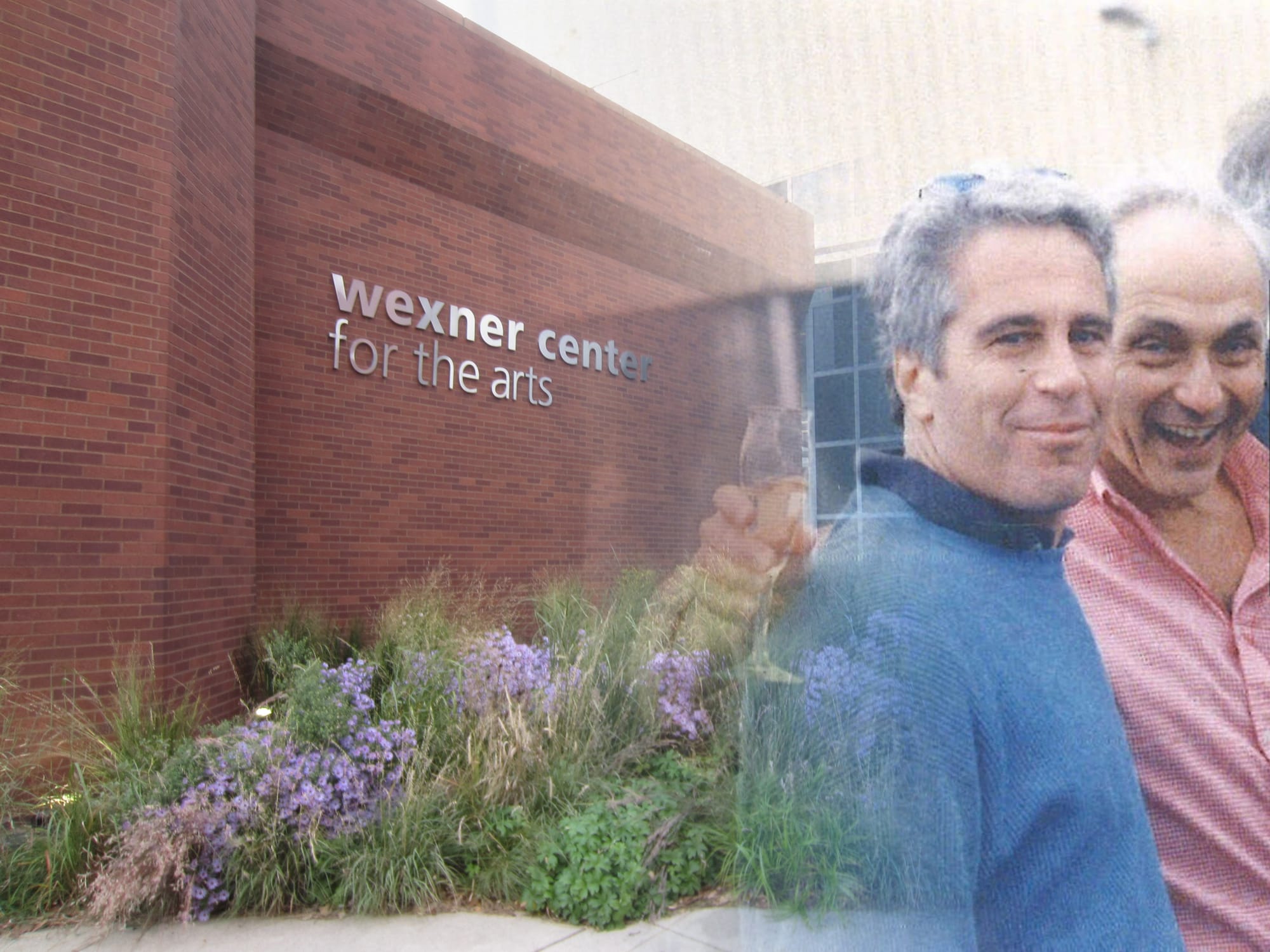
Unionized staff at the Ohio State University's (OSU) Wexner Center for the Arts have officially called for the renaming of the institution and other campus buildings named after Les Wexner, the university's billionaire benefactor who had granted convicted sex offender Jeffrey Epstein power of attorney over his massive fortune for decades.
In its official statement to the university, Wex Workers United said that the retail magnate's name “does a profound disservice to the incredible artists we work with and to our community members who deserve to engage with art without feeling complicit in supporting human traffickers, rapists, and pedophiles.”
A union representative who spoke to Hyperallergic on the condition of anonymity shared that negative comments from patrons and visitors about the center's name were “directly affecting our staff.”
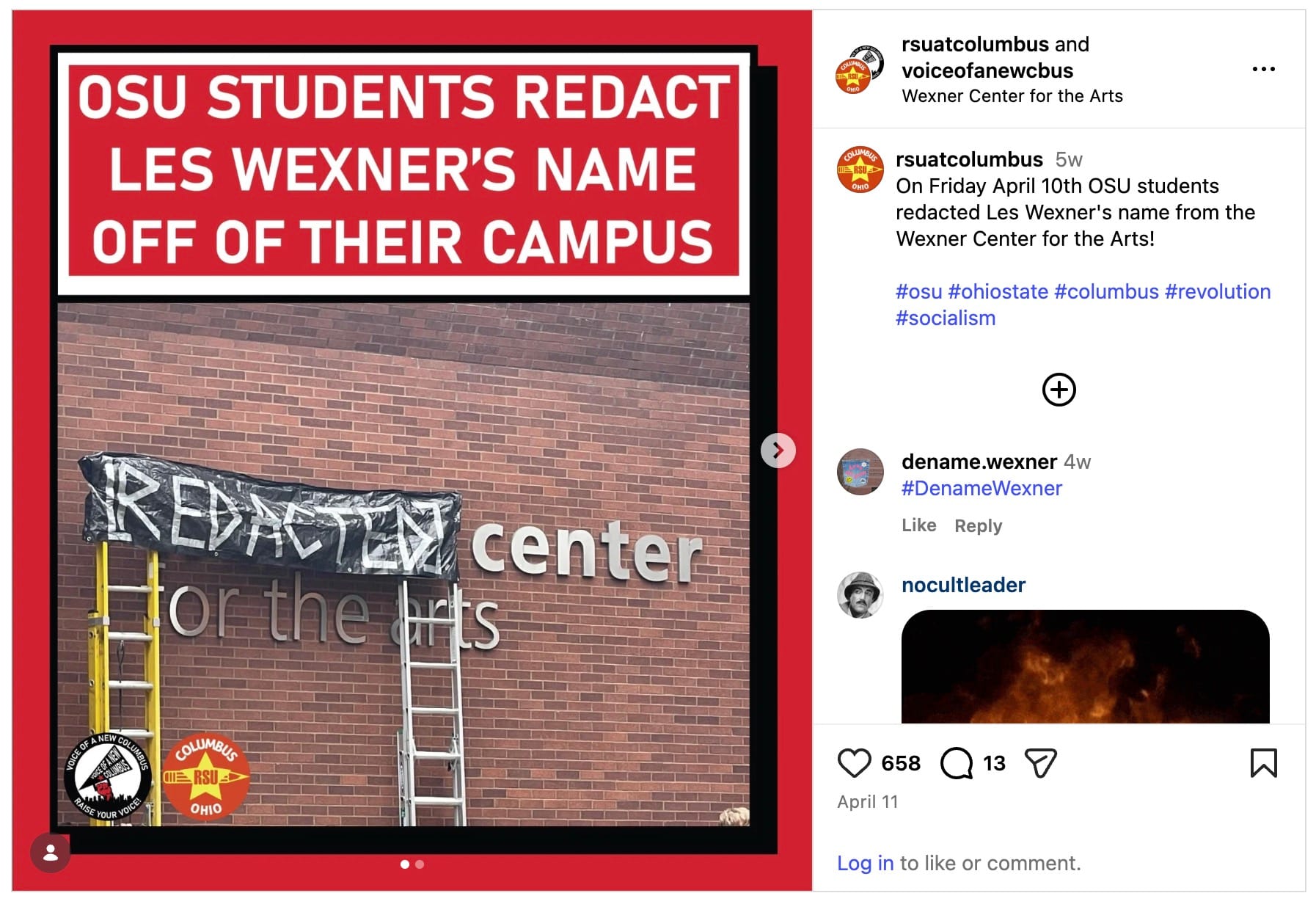
The union’s call for the university to rename the arts center and other campus facilities bearing the Wexner name follows similar requests. Following the billionaire’s deposition in February, the Ohio Nurses Association demanded that the university rename the Wexner Medical Center. Concurrently, OSU's students, alumni, and community members have staged multiple protests on campus, including an April 10 action in which students “redacted” Wexner's name from the art center's façade with a black tarp.
OSU spokesperson Chris Booker declined to comment on the Wex Workers United's statement, but told Hyperallergic that approximately 500 requests have been filed through the official University Naming Review Procedure since Wexner was formally questioned, noting that “each request is thoughtfully considered.”
During an interview ahead of the billionaire's deposition, OSU President Ted Carter noted his appreciation for the Wexners' philanthropic support and explained that the university's rigorous procedure for reviewing and approving name changes “goes after fact-finding” and “cannot be based on a supposition or filling in a narrative,” detailing why an earlier request to rename the Wexner Football Complex was rejected.
Wexner, the founder and former CEO of L Brands, the former parent company of Victoria's Secret, has never been formally charged and has publicly denied having any knowledge of Epstein's crimes since 2019. He was subpoenaed by the House Oversight Committee in January after the release of an unredacted FBI document from 2019, which listed him as a co-conspirator of Epstein's child sex trafficking ring.
In his pre-deposition statement and throughout the questioning, the 88-year-old maintained that he never bore witness to the “side of Epstein’s life for which he is now infamous” throughout the time that the disgraced financier oversaw his finances, adding that “the thought of what he did makes me sick.”
Wexner also reiterated that he had terminated all contact with Epstein when he was charged for the first time in 2007, later discovering that Epstein had been misappropriating funds from the family fortune. During the deposition, Wexner stated that he never met, heard of, or had any sexual contact with Virginia Roberts Giuffre, Epstein's primary accuser, whose allegations that she had been trafficked to the billionaire for sex on multiple occasions became public after documents were unsealed in 2024.
At the time of the 2024 unsealing, the university described Epstein's crimes as “reprehensible” in a statement to Hyperallergic, and referred to a $336,000 contribution OSU made to the state's human trafficking initiative in 2020 based on the figure that Epstein himself pledged to the university in decades past. However, OSU stood by Wexner in light of the allegations, noting to Hyperallergic that the university was grateful for the benefactor's “ongoing support and service.”
Skepticism surrounds Wexner's claims of total ignorance of Epstein's child sex trafficking crimes as he was mentioned in the Epstein files over 1,000 times, and House Oversight Committee members asserted that he was essentially financially responsible. Reports on the Epstein-Wexner connection in 2019 also showed that Epstein had posed as a talent recruiter for Victoria's Secret to lure models; Wexner has claimed that he confronted Epstein about the behavior and that he denied it.
Wex Workers United stated that “artists are choosing not to work with us because of Wexner's close association with Epstein,” adding that staff members see firsthand how students, visitors, artists, and colleagues “grapple with the weight of coming through our doors.”
Though OSU has yet to rename a building, as the procedure was instituted in 2022, the union representative noted that other universities and cultural institutions worldwide have divested from the Sacklers over the pharmaceutical family's role in enabling the opioid crisis.
“We care so much about the artists we work with and the community we serve, and the bid to rename the building is rooted in the fact that we believe in and are proud of what we do,” the representative added. “The name really is a detriment to our mission.”
Karla Knight’s Cosmic Conspiracies
May. 22nd, 2026 06:38 pmhyperallergic_feed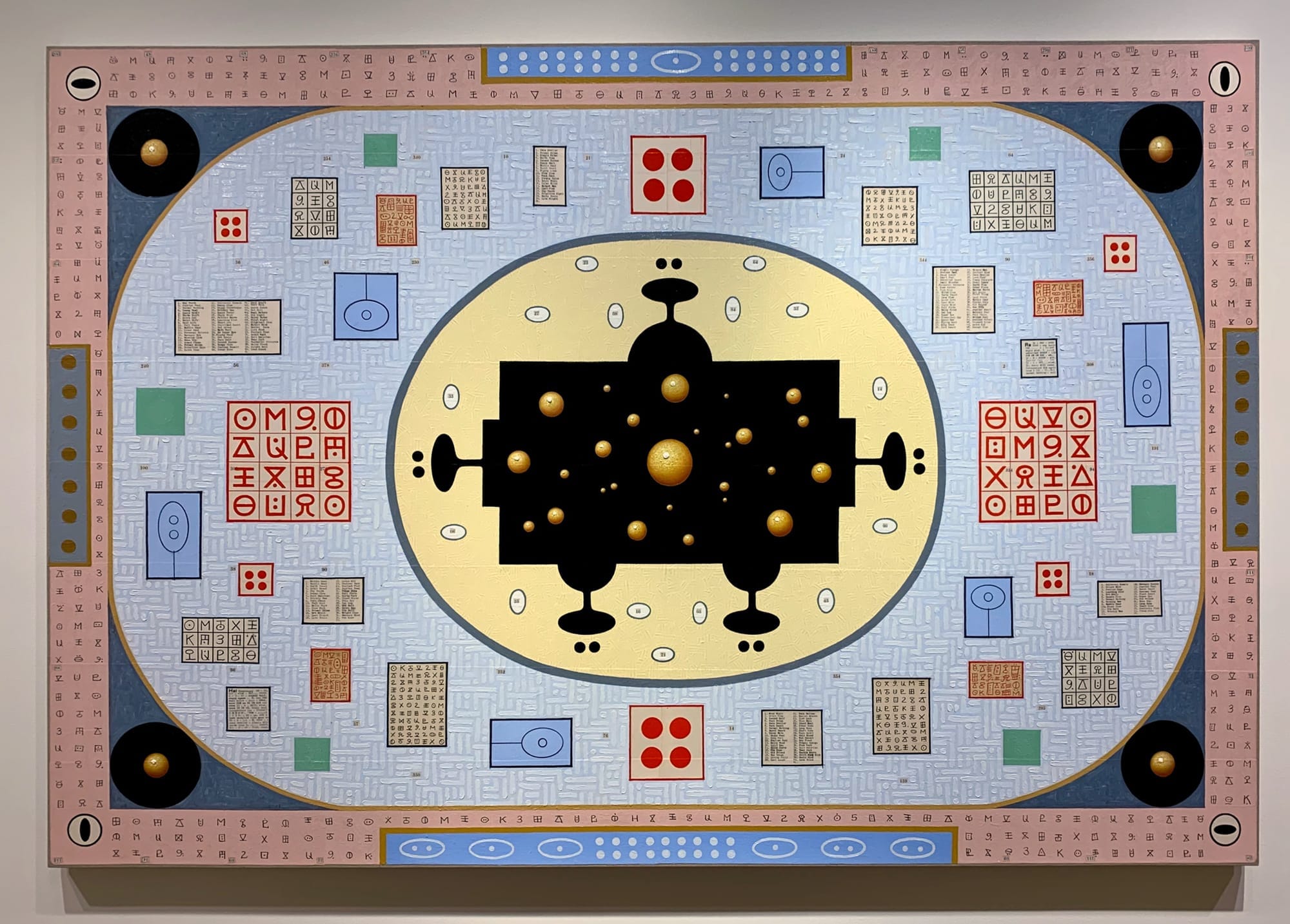
The image of an irregular black box with protuberances outlining some obscure device, floating in a larger field of red, confronts visitors to Orbit, an exhibition by Karla Knight at Andrew Edlin Gallery. In “Feelers” (2025–26), a large, square, wall-hanging painted cotton work, rows of cryptic symbols suggest some distant civilization’s written script — a challenge to codebreakers, perhaps. Within the central black device, another set of arcane symbols in a square surrounds and is in turn surrounded by floating spheres of white and gold. Circular lines — some broken, some continuous, ellipses within circles within ellipses — trace orbital paths of planets or stars or sub-atomic particles.
What to make of such half-familiar signs? Are they richly composed blueprints for mysterious systems connected to extraterrestrial lifeforms — schematics for advanced engines that could guide us toward wormholes to new coordinates of potential? Or attempts at mapping some underlying substrate of the universe?
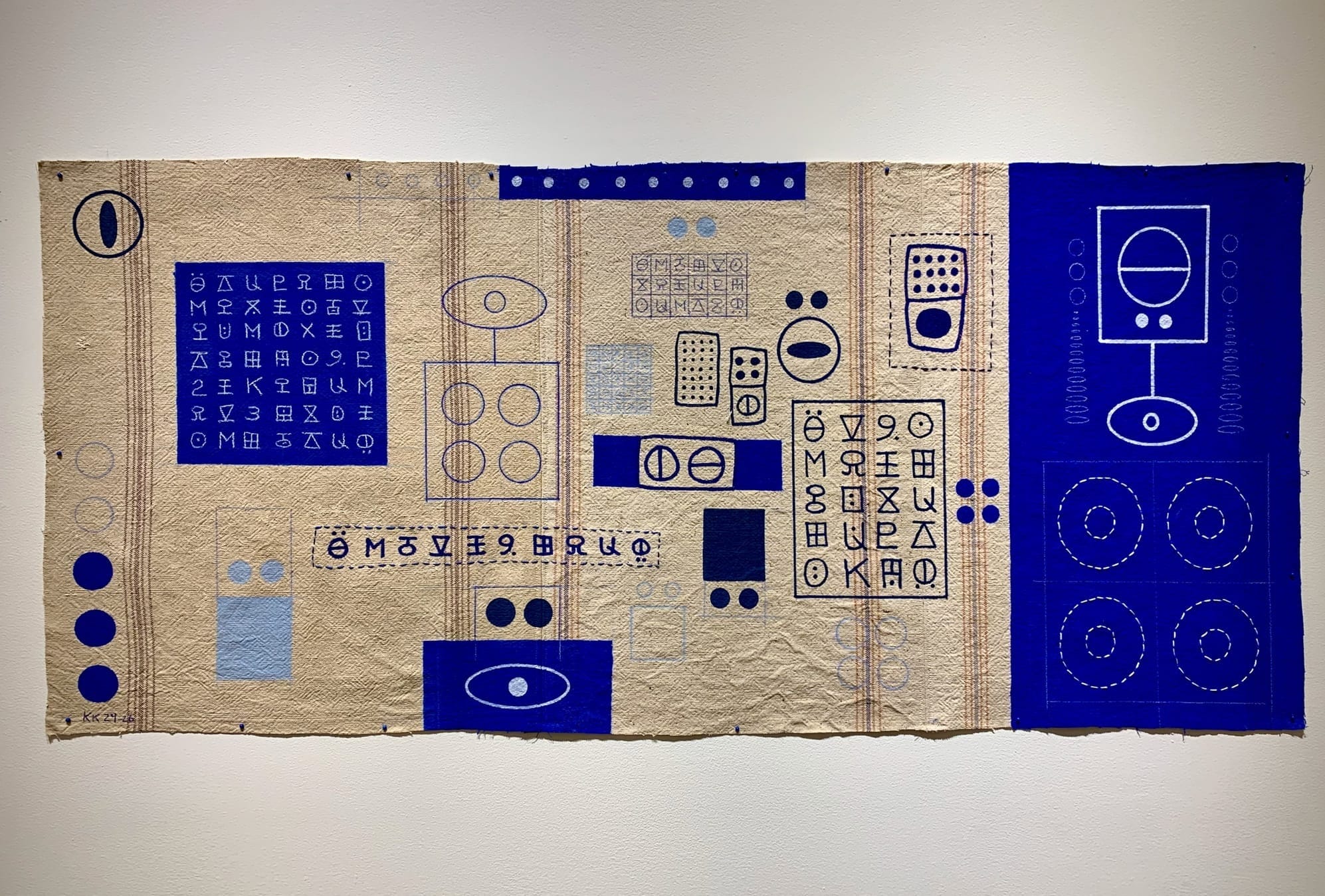
Such questions emerge from the shifting arrays in paintings and tapestries in Orbit. Culled from what might seem an overactive imagination fueled by generations of crackpot lore regarding supernatural phenomena, Knight nonetheless remains tethered. She manages this by vectoring us toward dimensions beyond the usual spatiotemporal anchors of planet Earth via meticulously tricky game boards and multi-dimensional plans for landing strips and takeoff zones. Principally a mix of cosmological and cipher-ish figures from languages of unknown provenance, Knight’s formal choices and steady-handed implementation make the paranormal seem, well … normal.
If all symbology is invented and if that arbitrariness extends even to science-generated models taken as fundamentally “true” representations of empirical realities, then perhaps deliberate and even crazy gestures by creative thinkers legitimately point toward valuable directions for understanding our place in the universe. Knight’s ongoing creative project intimates as much, inviting visitors to contemplate entry into new vistas, suggesting that there might be underlying forces working just beyond our perception. Her lively yet methodical two-dimensional grids imply not only a third dimension but further significant under-attended dimensions, if only we could parse the signs inscribed for us. Bold but not overly assertive saturated hues in primary colors contribute to a sense of seriously designed games in Knight’s work, presented as navigational cross-overs to numinous realms.
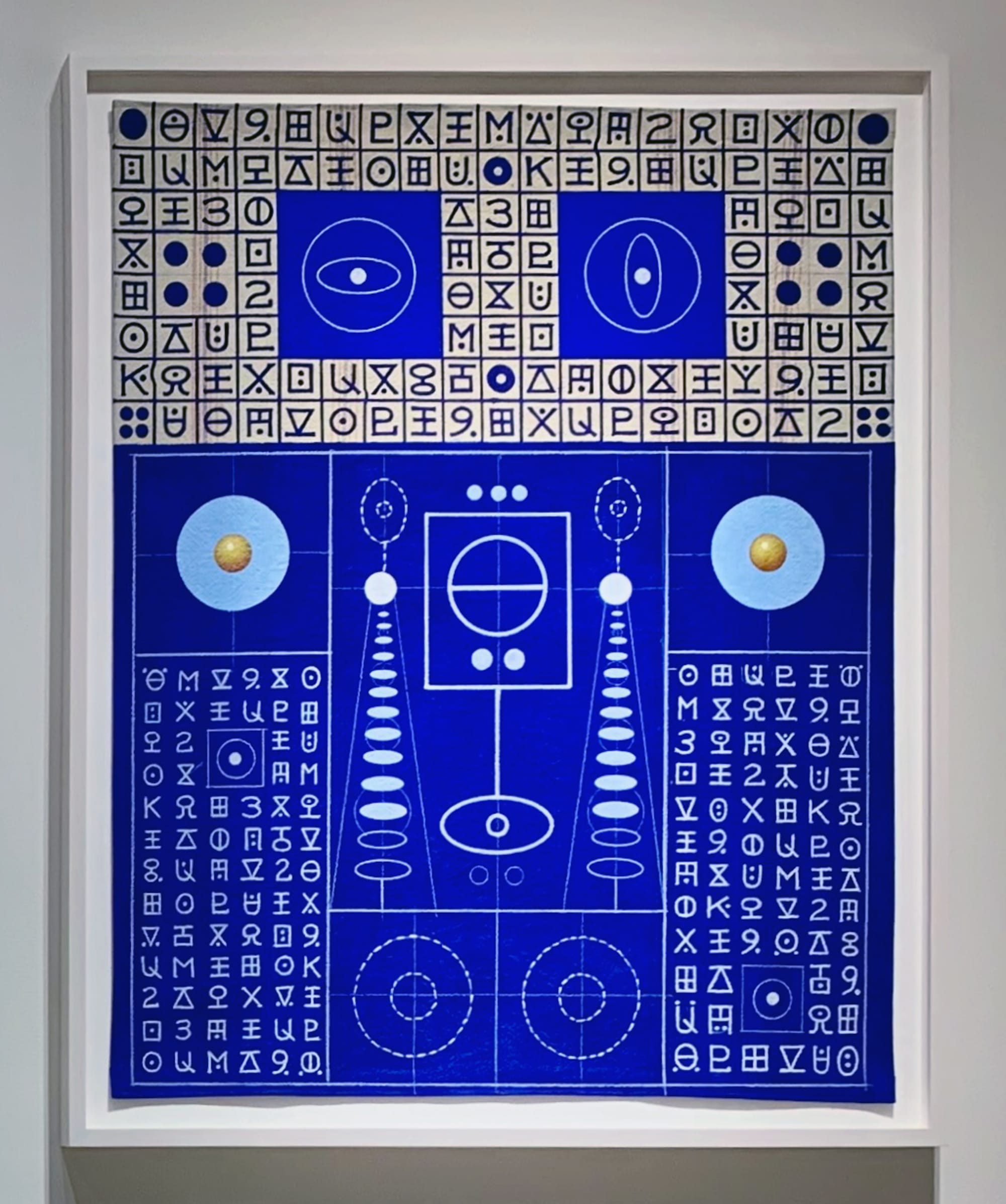
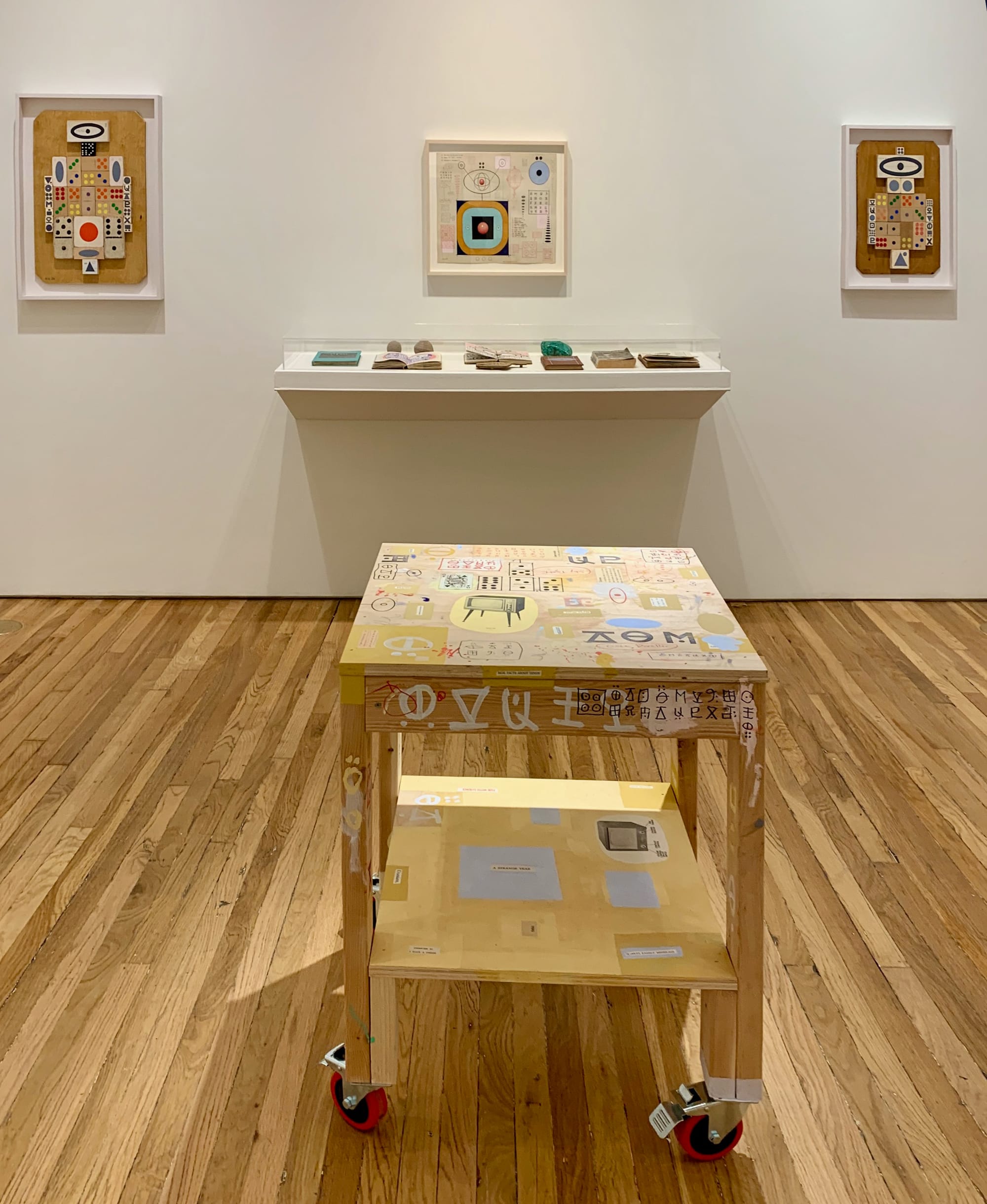
Left: Karla Knight, "Blue Libra" (2024–25), fabric dye, flashe, acrylic marker, pencil, and embroidery on cotton; right: installation view of Karla Knight: Orbit at Andrew Edlin Gallery
In works from the Blue Libra series (2024–26), sky-blue textures of cloth and paint pucker as if cosmic aureoles nestling around insulated golden heavenly bodies. These glowing spheres, with their talismanic presences, recur throughout much of Knight’s work. In pieces like “Astronomy for Everybody” (2024–26) and “Red Connector 2” (2025), series of these orbs decrease or increase in size as if heading toward or away from viewers to unseen vanishing points. Her most expansive vision — the landscape-oriented “Orbiter 2” (2024–25), marked out in a lighter color scheme on linen — features dozens of the shiny spheres occupying another dark device, surrounded by scores of smaller boxes containing symbolic character sets.
Knight’s diagrams and tables of coded figures resemble the would-be universal symbols loaded onto the Voyager spacecraft for contact with distant lifeforms — perhaps not coincidentally from the same era that Knight’s father was prolifically publishing books like Harnessing the Sun: The Story of Solar Energy (1976); Colonies in Orbit: The Coming Age of Human Settlements in Space (1977); and Those Mysterious UFOs: The Story of Unidentified Flying Objects (1975). Her intense clusters of glyphs are like inscriptions left on ancient tombs to broadcast knowledge now lapsed into the occult across generations, reminiscent of Sumerian and other archaic alphabets, or pathway indicators like Nazcal lines and other presumably extraterrestrial markings à la Chariot of the Gods?.
Reflecting the unsettling notion that some conspiracy-mongering has been right all along, Knight’s project might be seen as a counter to more risible earthbound conspiracies with glimpses of other universes, frequencies resonant with possibilities: extraterrestrial life, afterlife, communication via lesser-used senses. If it’s going to be conspiracies all the way down, just as well make your own set of potent symbols to see if anyone else is able to crack the codes, and perhaps join in co-creating. And if the steps she maps don’t resolve to any definitive meaning, no matter — putting thought and imagination into play might be the whole point.
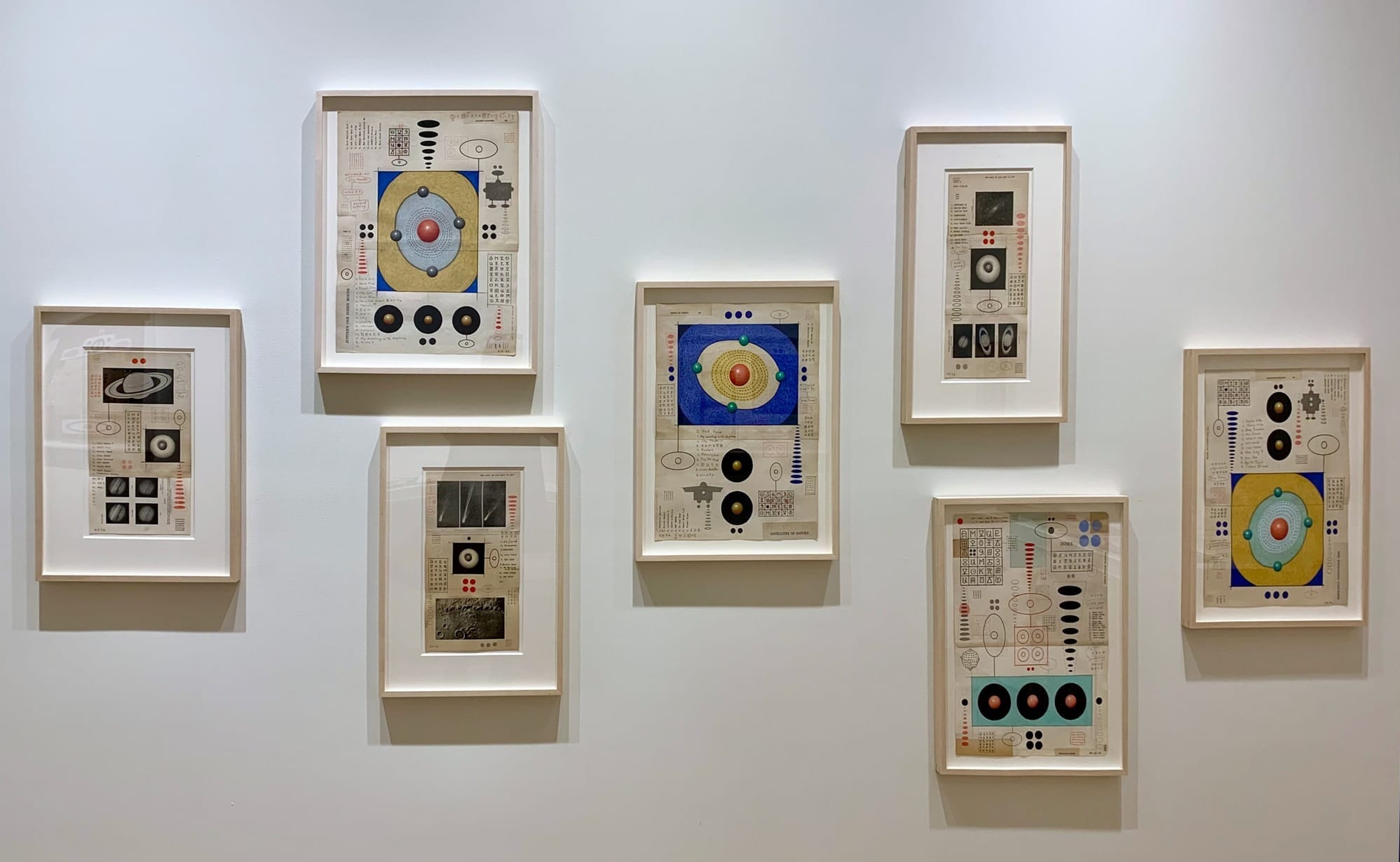
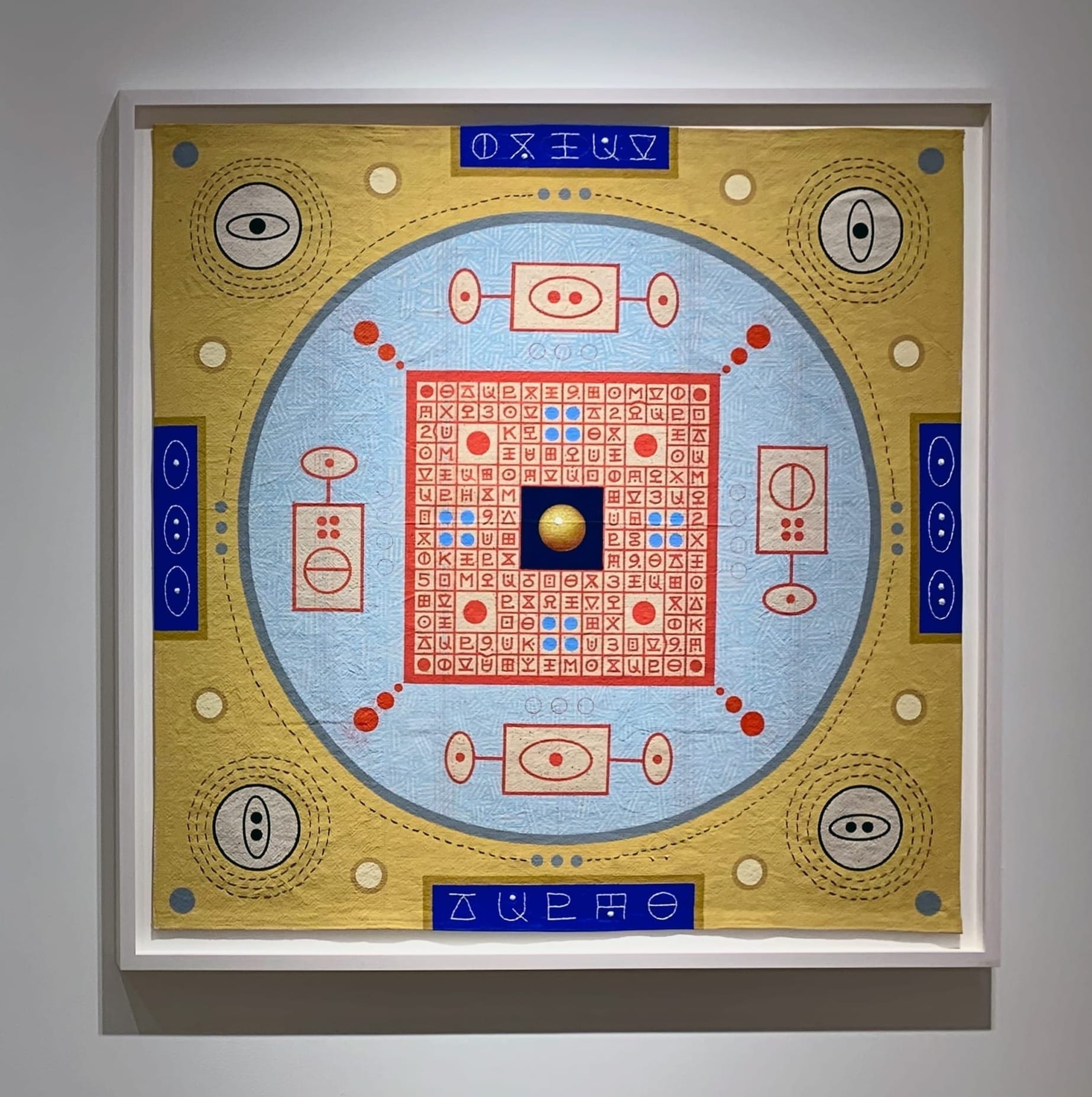
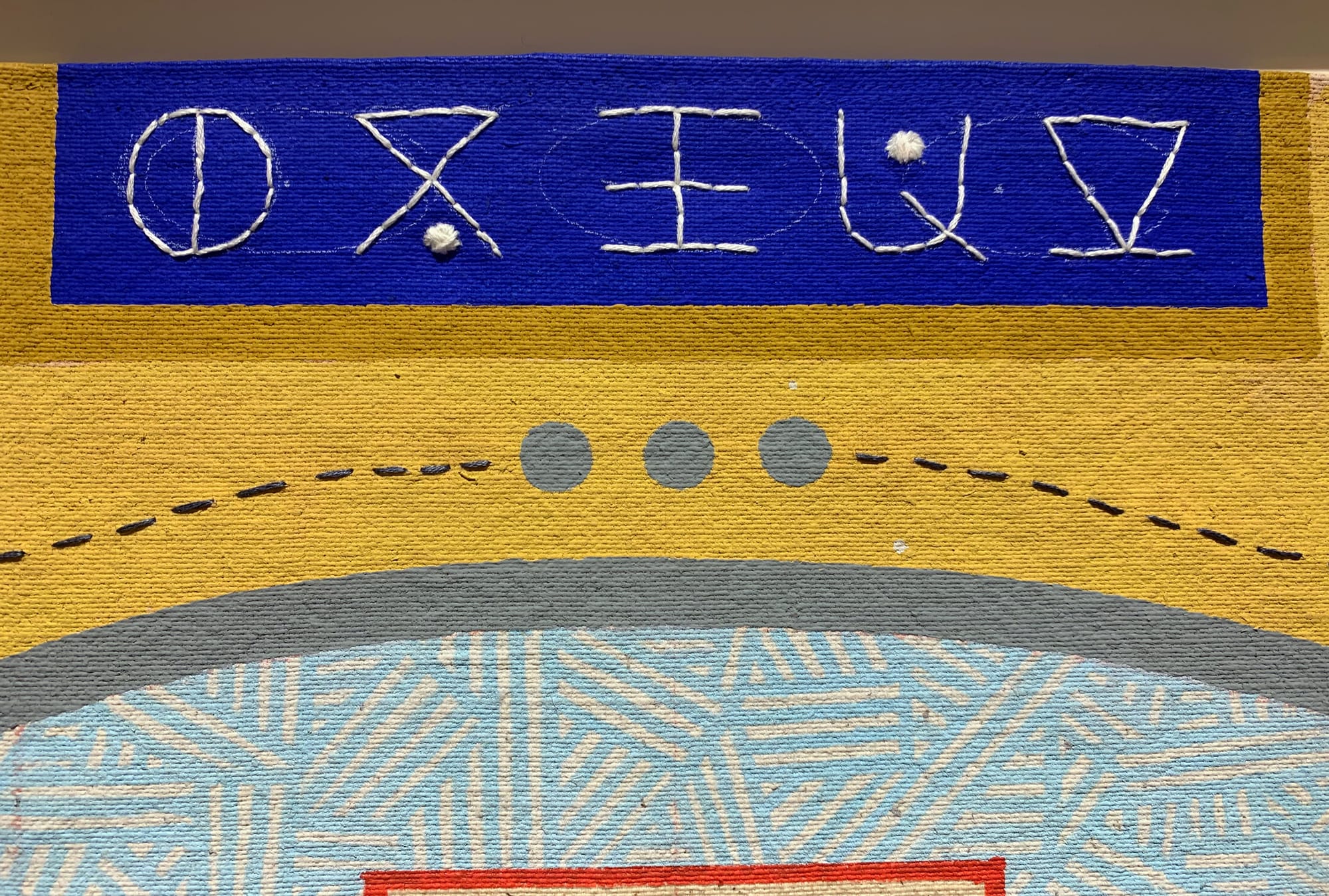
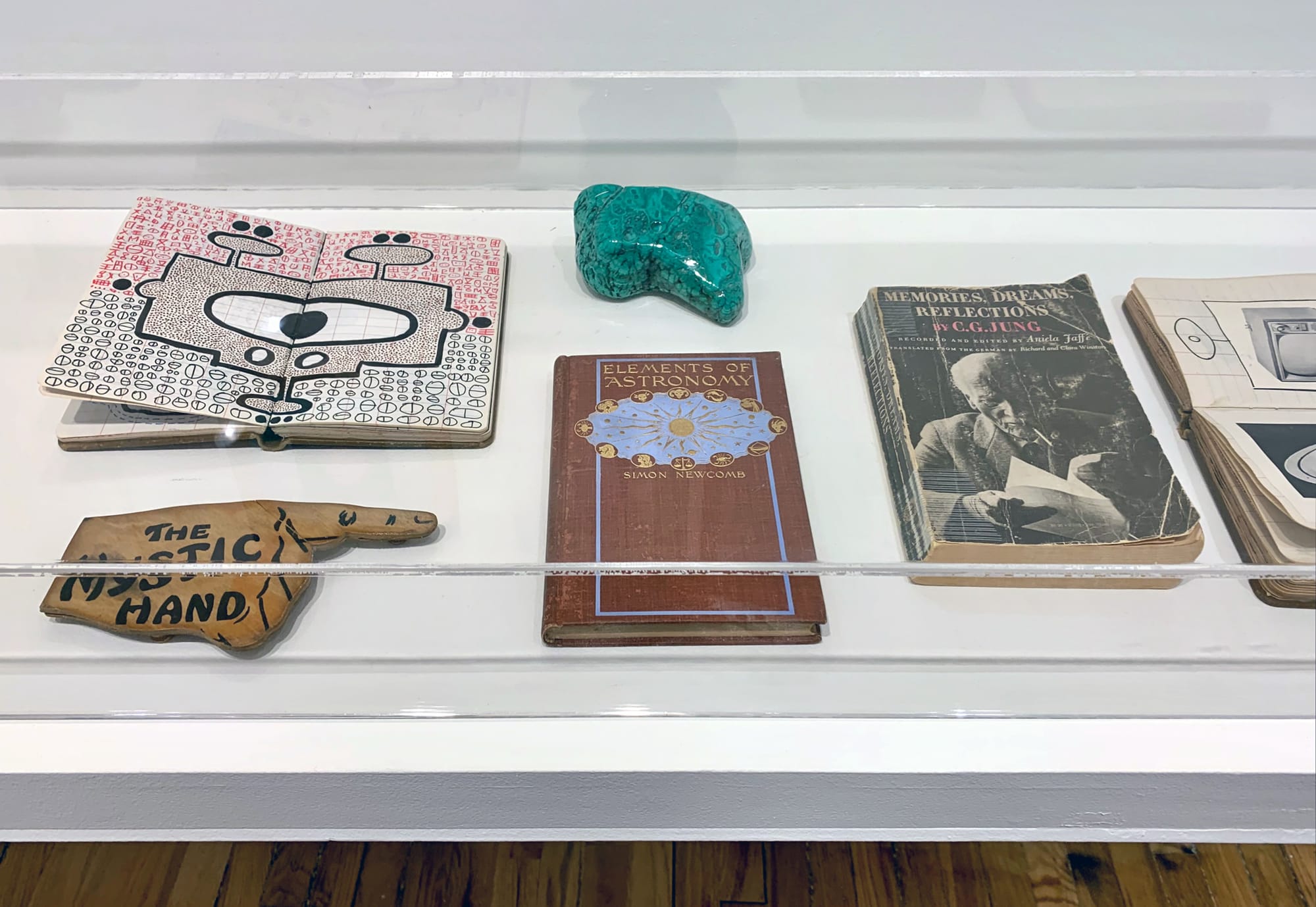
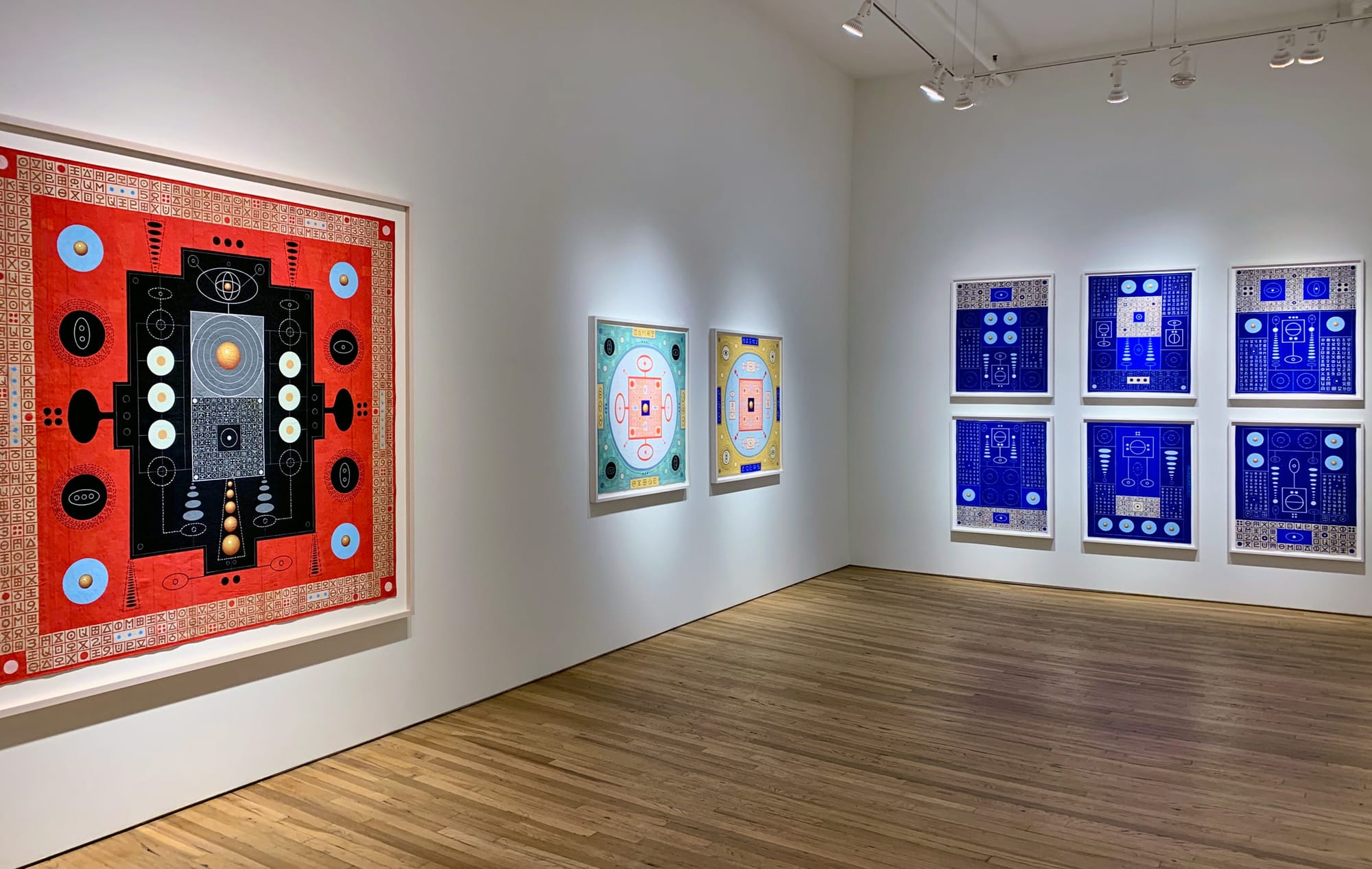
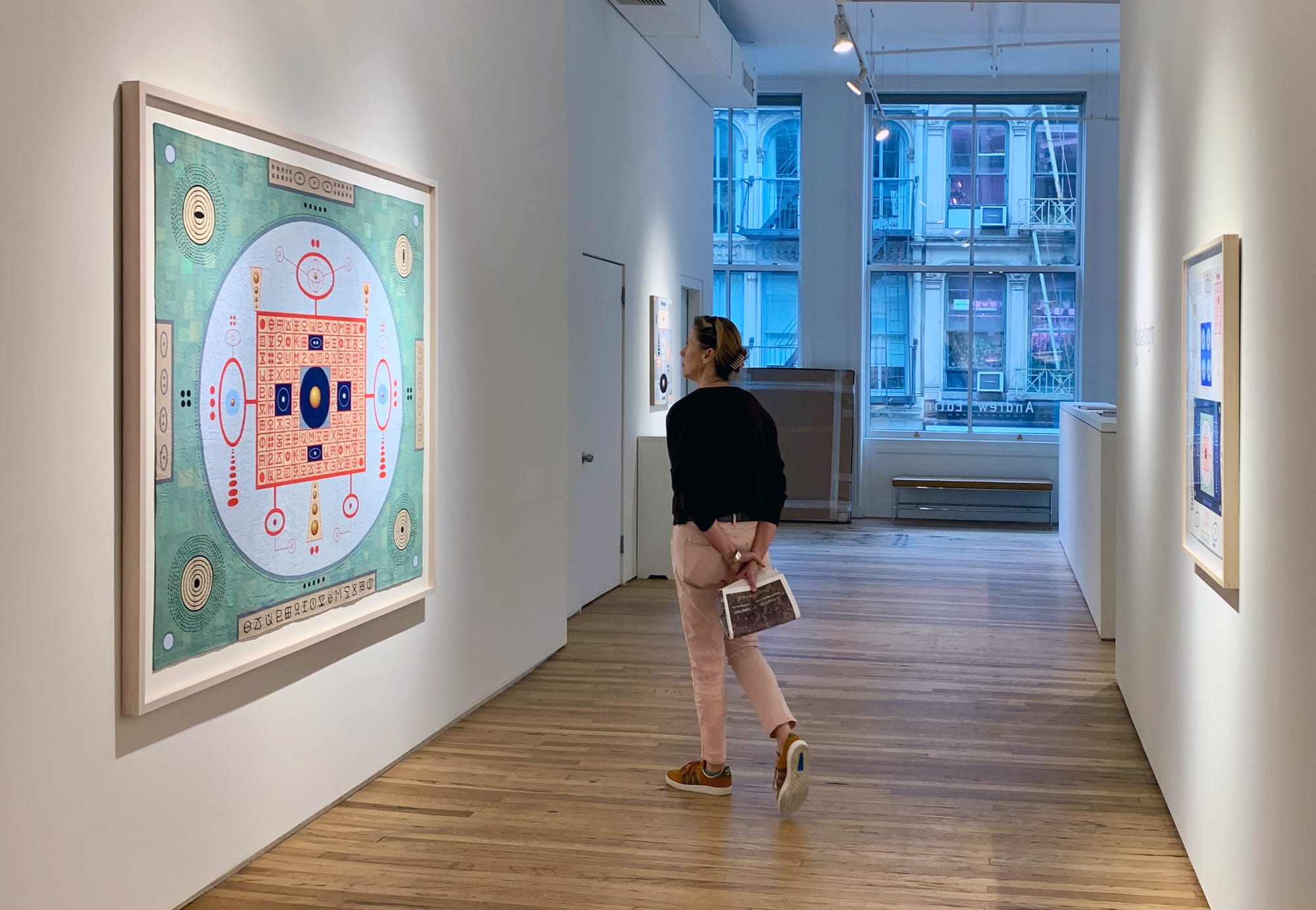
Karla Knight: Orbit continues at Andrew Edlin Gallery (392 Broadway, 2nd floor, Tribeca, Manhattan) through June 13. The exhibition was organized by the gallery.
US Military Using More Missiles to Defend Israel Than Israel Itself
May. 22nd, 2026 07:04 pmtruthout_feedThe U.S. is using more of its resources to defend Israel than Israel is itself, according to U.S. officials who spoke to The Washington Post on Thursday. The officials disclosed that the U.S. military has depleted much of its missile-defense inventory after using far more of the weaponry to defend Israel throughout the war on Iran than Israel has used itself. The U.S.
Rubio Baselessly Smears Bolivia’s Protesters as “Criminals and Drug Traffickers”
May. 22nd, 2026 06:37 pmtruthout_feedIn the midst of a wave of mass protests in Bolivia, Secretary of State Marco Rubio wrote on X that the United States “stands squarely in support of Bolivia’s legitimate constitutional government,” smearing the protesters as “criminals and drug traffickers” who he would not allow to “overthrow democratically elected leaders in our hemisphere.” Rubio’s comments on Bolivia came after three weeks…
Trump Says He “Gets a Kick” Out of Criticisms He Receives for US Military Deaths
May. 22nd, 2026 06:20 pmtruthout_feedLess than a week before Memorial Day weekend — a federal holiday that aims to recognize members of the U.S. military who have died in combat zones — President Donald Trump sought to downplay the U.S. casualties of his ill-defined and unauthorized war on Iran. Speaking to reporters at Joint Base Andrews on Wednesday, Trump was asked about servicemembers’ deaths. “We lost 13 people.
Resistance to Flock Cameras and Police Surveillance Is Exploding
May. 22nd, 2026 06:20 pmtruthout_feedIn communities large and small, red and blue, all across the United States, residents are filling local council meetings in opposition to the explosive growth of high-tech police surveillance systems. Local movements to rid city streets of AI-powered surveillance cameras and Automated License Plate Recognition (ALPR) networks used by law enforcement are growing rapidly amid scandals…
Private Equity Now Owns 1 in 8 Apartment Units, a 50 Percent Increase Since 2021
May. 22nd, 2026 06:09 pmtruthout_feedA new report by the Private Equity Stakeholder Project (PESP) shows that private equity firms now own almost 3 million apartment units in the U.S., which amounts to one in eight apartment units, some 13 percent of apartment units in the country. Approximately half of these units were bought since 2021, highlighting private equity’s turn to the housing market even as the U.S. suffers from a housing…
Trump Celebrates Colbert’s Ouster at Hands of CBS Owners Aligned With His Admin
May. 22nd, 2026 05:57 pmtruthout_feedLate-night comedian Stephen Colbert has ended his 11-year run as host of The Late Show on CBS. His program’s cancellation removes one of President Trump’s most vocal critics from the airwaves and comes after the comedian criticized his own employer for agreeing to pay $16 million to settle a lawsuit brought by President Trump. The settlement came as CBS parent company Paramount was seeking the…
Humanitarian Convoy Stuck in Libyan Desert Is Determined to Reach Gaza
May. 22nd, 2026 05:44 pmtruthout_feed“We have been here for four days,” says South African writer and academic Jessica Breakey in a voice note sent from the Libyan desert where she and hundreds of volunteers are stuck as they attempt to deliver aid to Gaza. In the background is the sound of people chatting, organising, and singing songs for Palestine. “There are no toilets. But this is a really interesting…
animefeminist_feedSailor Moon's original North American release was a product of its moment, shaped by broadcast standards, marketing logic, and a cultural framework that simply did not have room for everything the original series was doing.
The post Fighting Evil by Moonlight, Selling It by Daylight: Sailor Moon and the limits of 1990s American girl power appeared first on Anime Feminist.
Omissions, Corrections, and Deceptions — Critics Blast the DNC’s Autopsy Report
May. 22nd, 2026 03:51 pmtruthout_feedA long-anticipated “autopsy” report from the Democratic National Committee (DNC) was released to the public on Thursday, containing multiple errors and omissions on subjects that may have cost Democrats the White House in 2024. The DNC — which commissioned the report that was authored by Democratic consultant Paul Rivera — sought to distance itself from its own document.
House GOP Cancels Iran War Powers Vote for Second Day in a Row
May. 22nd, 2026 03:15 pmtruthout_feedAfter four US Senate Republicans on Tuesday helped Democrats advance a war powers resolution intended to halt President Donald Trump’s illegal war on Iran, GOP leadership in the House of Representatives canceled a similar vote on Wednesday, and again on Thursday. Progressive and Democratic Party leaders in the House were quick to call out Republican leadership, including Rep. Mike Johnson (R…
Despite Trump’s Oil Blockade, Quiet Resistance of Daily Life Continues in Cuba
May. 22nd, 2026 02:59 pmtruthout_feedFor a Caribbean city known for its effervescent, out-of-doors culture, Havana has relatively few cars on its streets, not many people on its sidewalks, and a handful of places open for patrons. Life at midweek feels like a Sunday or a holiday. The background noise of competing internal-combustion engines, common to every modern city, has been replaced by the discrete whir of electric vehicles.
8 House Democrats Join GOP in Vote to Defund Schools That Support Trans Youth
May. 22nd, 2026 02:44 pmtruthout_feedOn Tuesday, May 19, the U.S. House passed H.R. 2616, the “Stopping Indoctrination and Protecting Kids Act,” by a vote of 217-198. The bill would hand the Trump administration enormous leverage to strip federal funding from any school that “teaches or advances concepts” related to transgender people, codifying into federal law the anti-trans definitions from Trump’s executive order 14168…
Anni Albers Wasn’t Afraid to Start From Zero
May. 22nd, 2026 02:30 pmhyperallergic_feed
You might know Anni Albers for her revolutionary, abstract woven artworks that helped pave the way for textiles to gain broad acceptance as a museum-worthy form. And perhaps you’re familiar with her incisive essays and books on weaving and design, art prints, fabric designs (some of which are still in production), or formative time spent in the weaving programs at two legendary schools: the Bauhaus and Black Mountain College, as a student and a teacher, respectively. But you might not know about the artist’s obsession with white blouses, how much she delighted in English-language idioms, and her penchant for extra-crispy Kentucky Fried Chicken.
Packed with lively detail and illuminating anecdotes, Nicholas Fox Weber’s Anni Albers: A Life traces the historic sweep of the artist’s biography and career, from her birth to a wealthy Jewish family in Berlin in 1899 to her 1933 escape from Nazi Germany to her later years in Connecticut. Her brilliant and independent mind, unsentimental practicality and determination, acidic zingers, and warm humor shine through in this nuanced, unvarnished portrait, with an almost familial closeness that’s one of its greatest strengths.
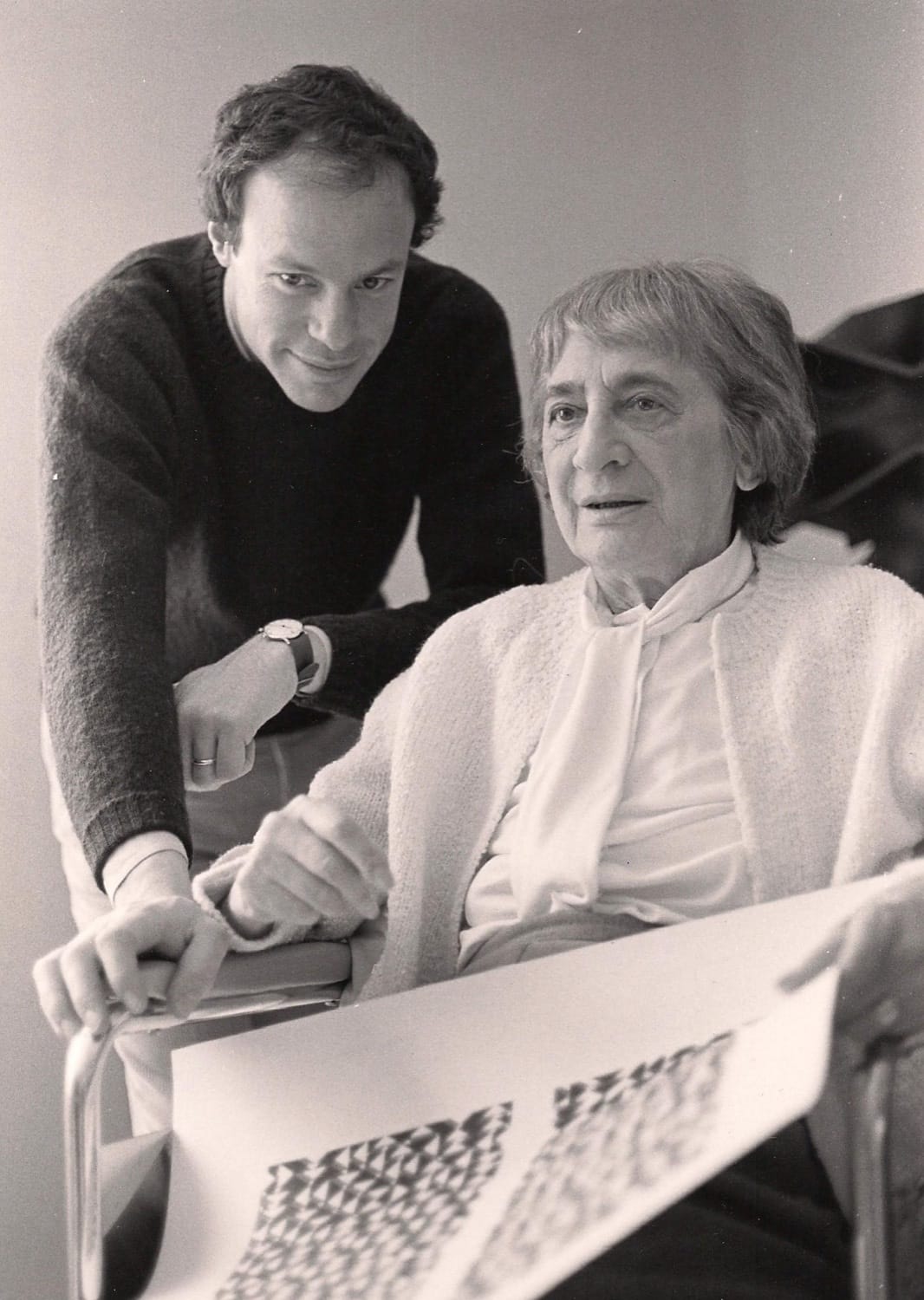
In 1971, a mutual friend introduced Weber to Anni Albers and her husband, painter Josef Albers. He began regularly visiting the artist couple at their spartan home in Connecticut. The following year, Weber started working on a book with Albers about her life, conducting in-depth interviews about her exacting methods and philosophies. “I chose not to tape her, since she became frozen when she knew she was being recorded,” the author writes. After leaving her house, he’d pull his car over and write down what she said. But when Josef died in 1976, Albers called off the project.
Two days after the funeral, at the request of the Alberses’ lawyer, Weber officially went to work as an employee of their estate. In the 50 years since, he’s worked to preserve the couple’s legacies and continues to serve as the executive director of the Josef & Anni Albers Foundation. Although his initial book about Albers got axed, Weber remained an active part of the artist’s life until her death in 1994. His warm, perceptive writing reflects their close bond, with stories deftly told with an insider’s intimacy and a historian’s flair for correcting the record. He regularly amends Albers’s oft-quoted “stock stories” — the ones that she habitually repeated to friends and interviewers — and grounds them with facts and added context. Weber’s writing frequently appears in exhibition catalogs, articles, and new editions of Albers’s books, and, in 2020, he penned Anni and Josef Albers: Equal and Unequal. This new biography, however, reveals Albers’s personality and art with rare depth and dimension.
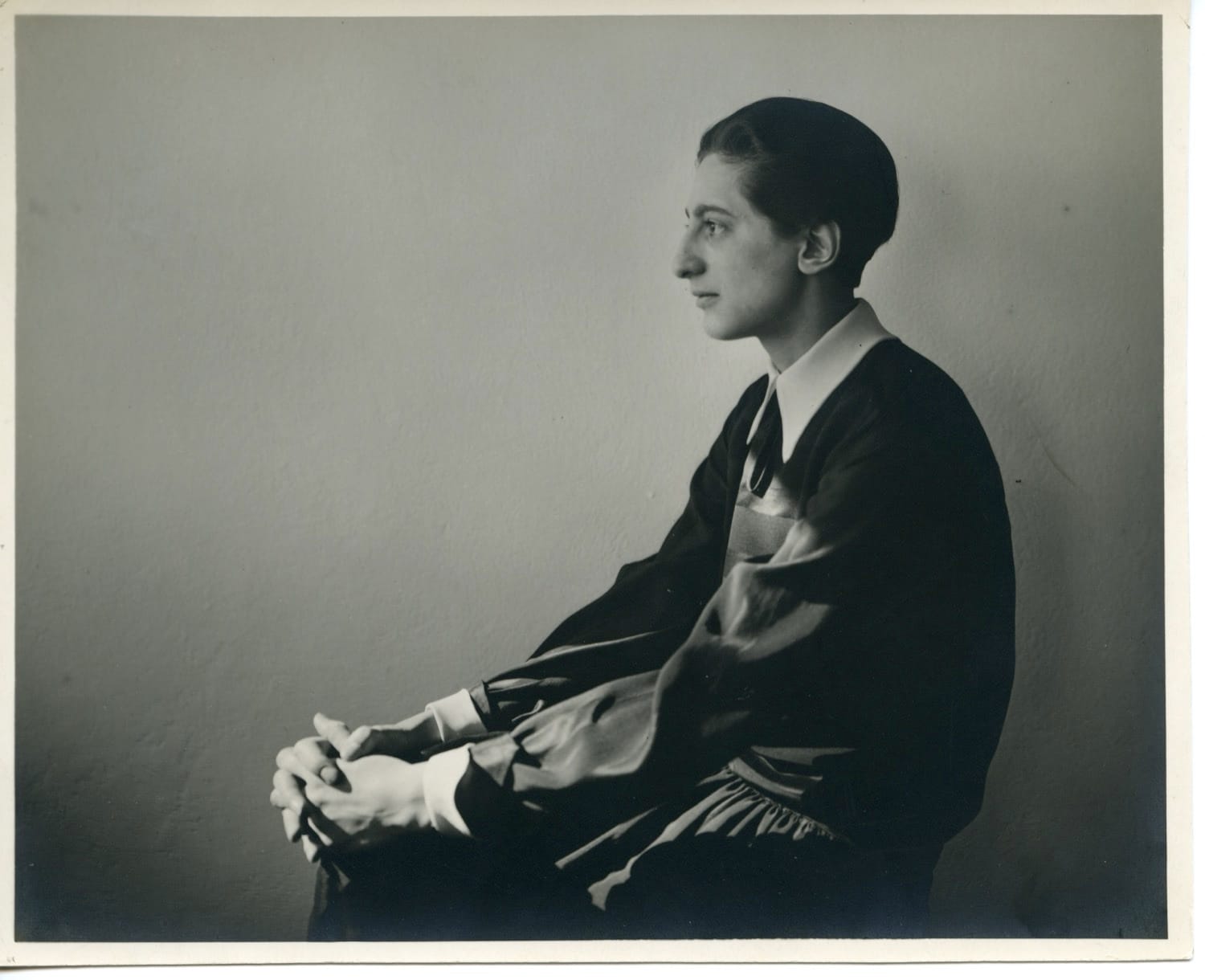
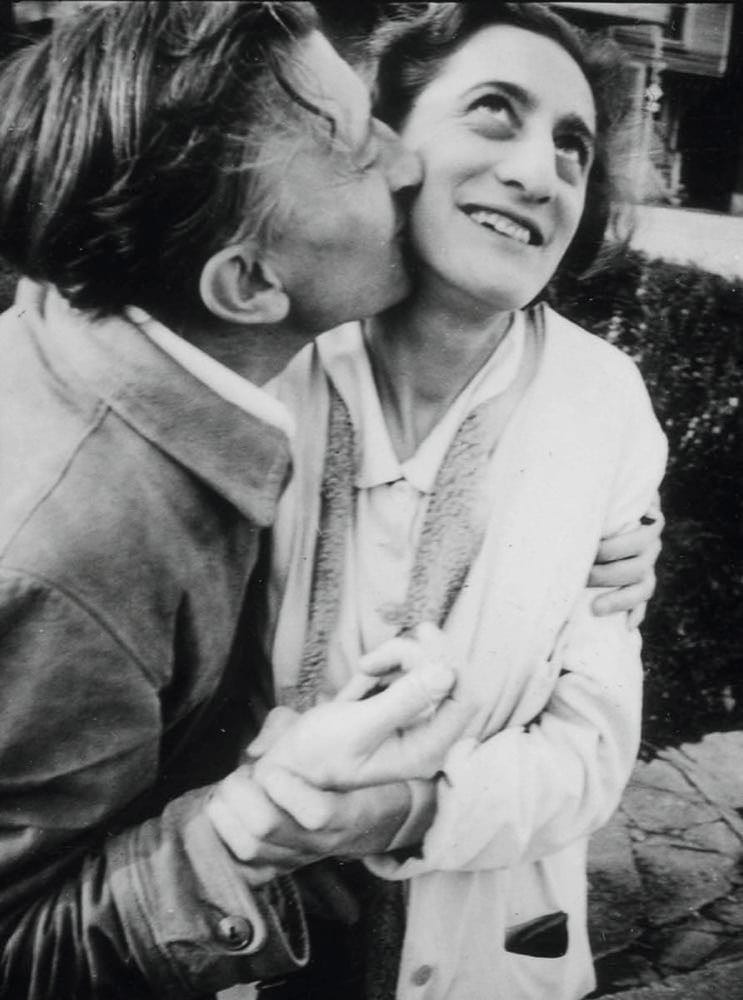
Anni Albers: A Life pieces together a web of the places she lived and worked, her travels and adventures, and the people she met along the way, among them many luminaries of the day (including Paul Klee, Wassily Kandinsky, Gunta Stölzl, John Cage, Merce Cunningham, Buckminster Fuller, Jacob Lawrence, Charles and Ray Eames, Ruth Asawa, Philip Johnson, and others).
Though the chapters are structured chronologically, the writing within often meanders back and forth through time, highlighting the evolution of Albers’s ideas and friendships. In a sense, the narrative echoes artist and Bauhaus instructor Klee’s urging to “take a line for a walk,” a concept rooted in movement, rhythm, and creative freedom that Albers took to heart and applied to her own work. We see how these encounters and connections shaped her rigorous approach to art and design, and how her unconventional ideas about weaving, industry, and creative process rippled out into the world — through not only her artwork but also her teaching, books, and essays.
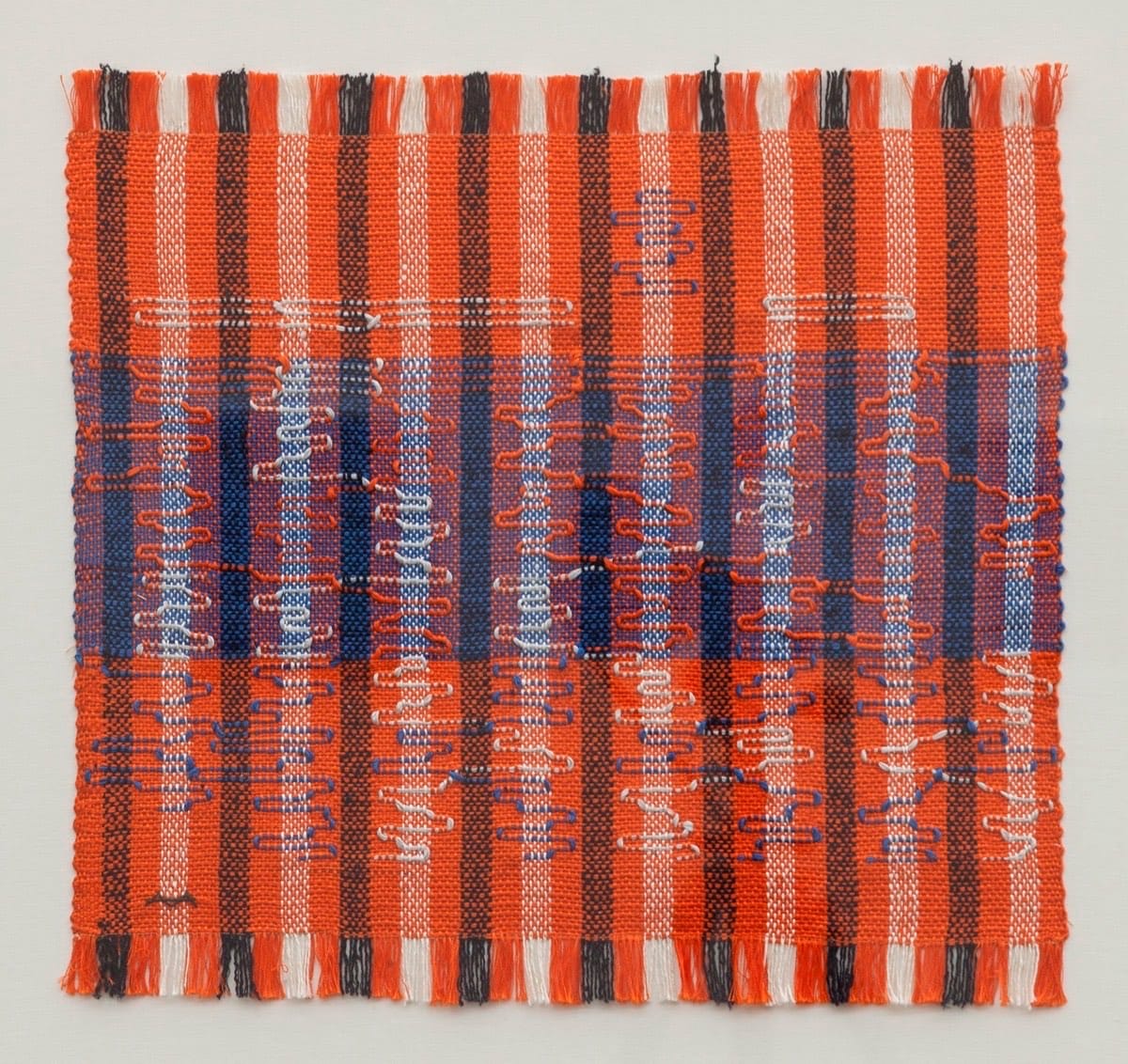
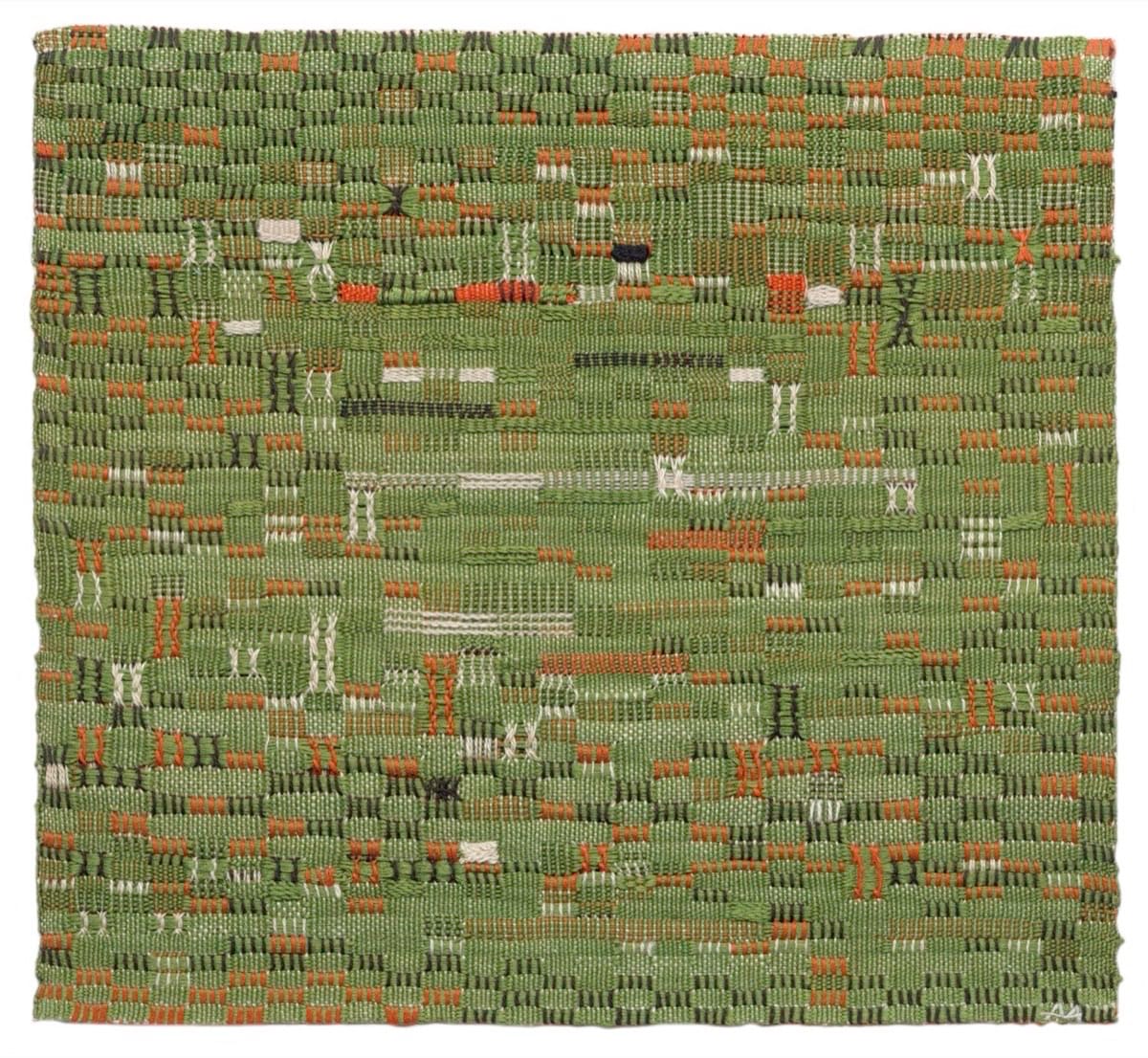
Weber writes that the fibers and looms that powered Albers’s creative practice also shaped “the battle of her life”: to obliterate the distinction between art and craft and to be regarded not only as a weaver, but as an artist. The artist referred to her woven wall hangings as “pictorial weavings” to indicate that these textiles are a visual art form — a concept that was groundbreaking at the time. As her body of work expanded to encompass printmaking forms like screenprinting, stone lithography, and photo offset, she reimagined her minimalist aesthetic, with its visual rhythm and underlying structure, in new formats through varied technologies.
Albers reinvented her art and life several times by choice and by circumstance. Whether starting fresh at a new school or in a new country, healing from loss, or solving daily problems, the idea of “starting from zero” — beginning with the most basic components and systematically working towards creative solutions, while still leaving room for play and intuition — echoes through her approach to art and living. “Our world goes to pieces; we have to rebuild our world,” Albers wrote in a 1944 essay, quoted in the book’s epigraph. “Out of the chaos of collapse we can save the lasting: we still have our ‘right’ or ‘wrong,’ the absolute of our inner voice — we still know beauty, freedom, happiness … unexplained and unquestioned.”
Anni Albers: A Life by Nicholas Fox Weber (2026) is published by Yale University Press and available online and in bookstores.
A View From the Easel
May. 22nd, 2026 02:07 pmhyperallergic_feed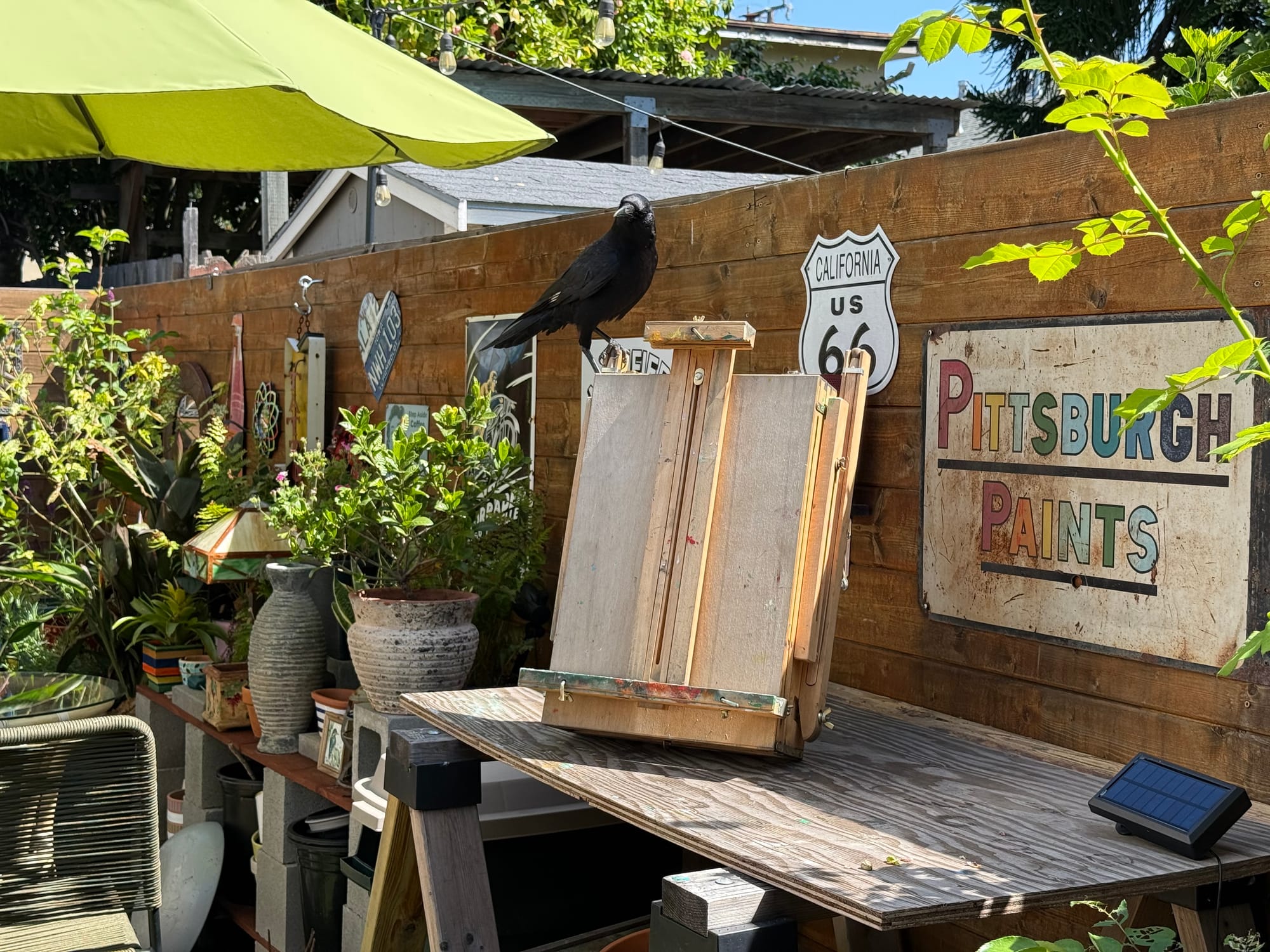
Welcome to the 338th installment of A View From the Easel, a series in which artists reflect on their workspace. This week, Kevin Callahan marks three years in his studio after losing his partner of 39 years and moving to a new home. He still finds reasons to smile as he paints and draws under the California sun.
Want to take part? Check out our submission guidelines and share a bit about your studio with us through this form! All mediums and workspaces are welcome, including your home studio.
Kevin Callahan, Oakland, California
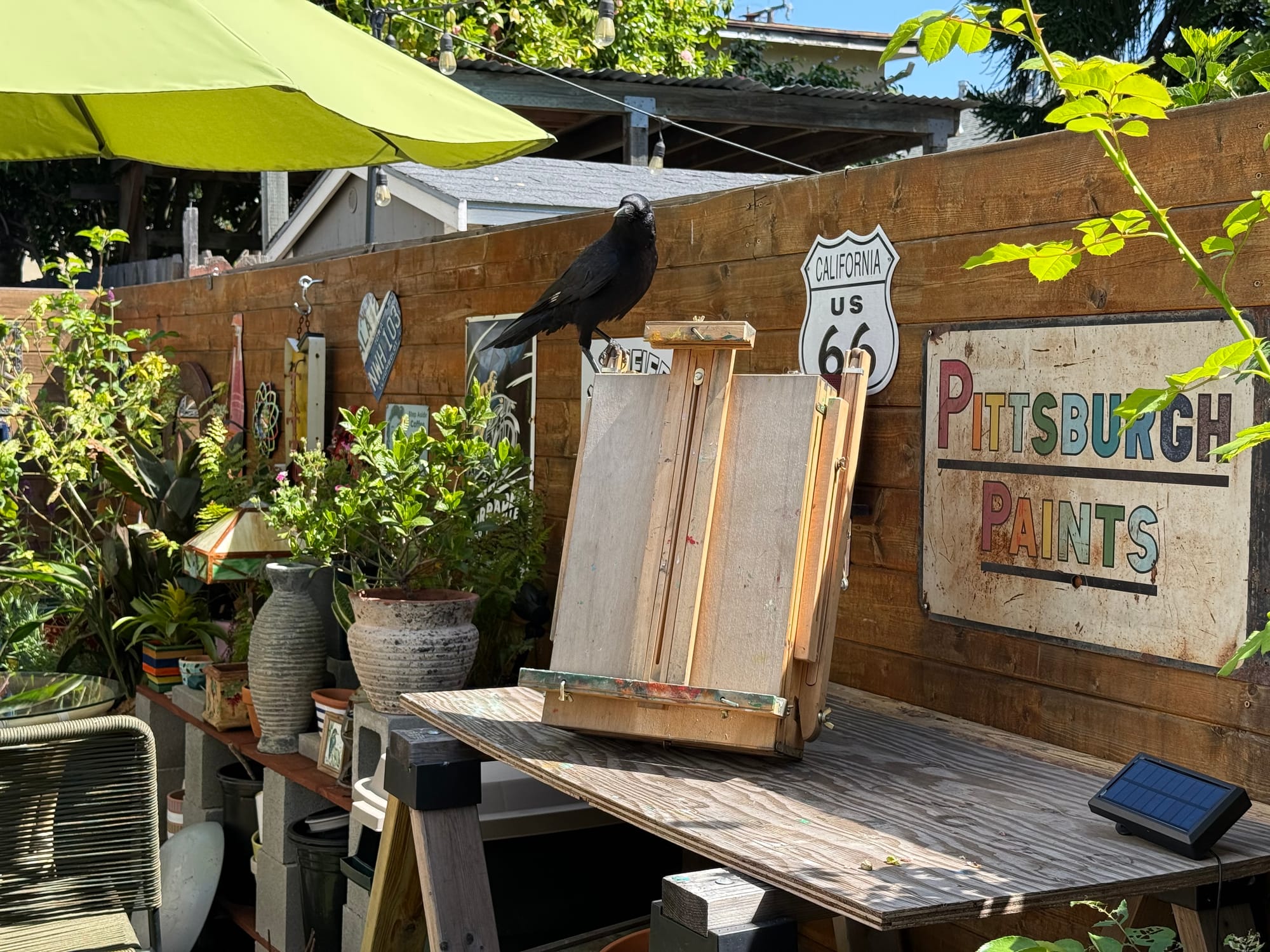
How long have you been working in this space?
Three years.
Describe an average day in your studio.
I’m an early riser and usually am out working around 9am. My morning starts with NPR programming and I eventually shift to music. I use a speaker and listen to music I have on a personal playlist (it’s huge).
How does the space affect your work?
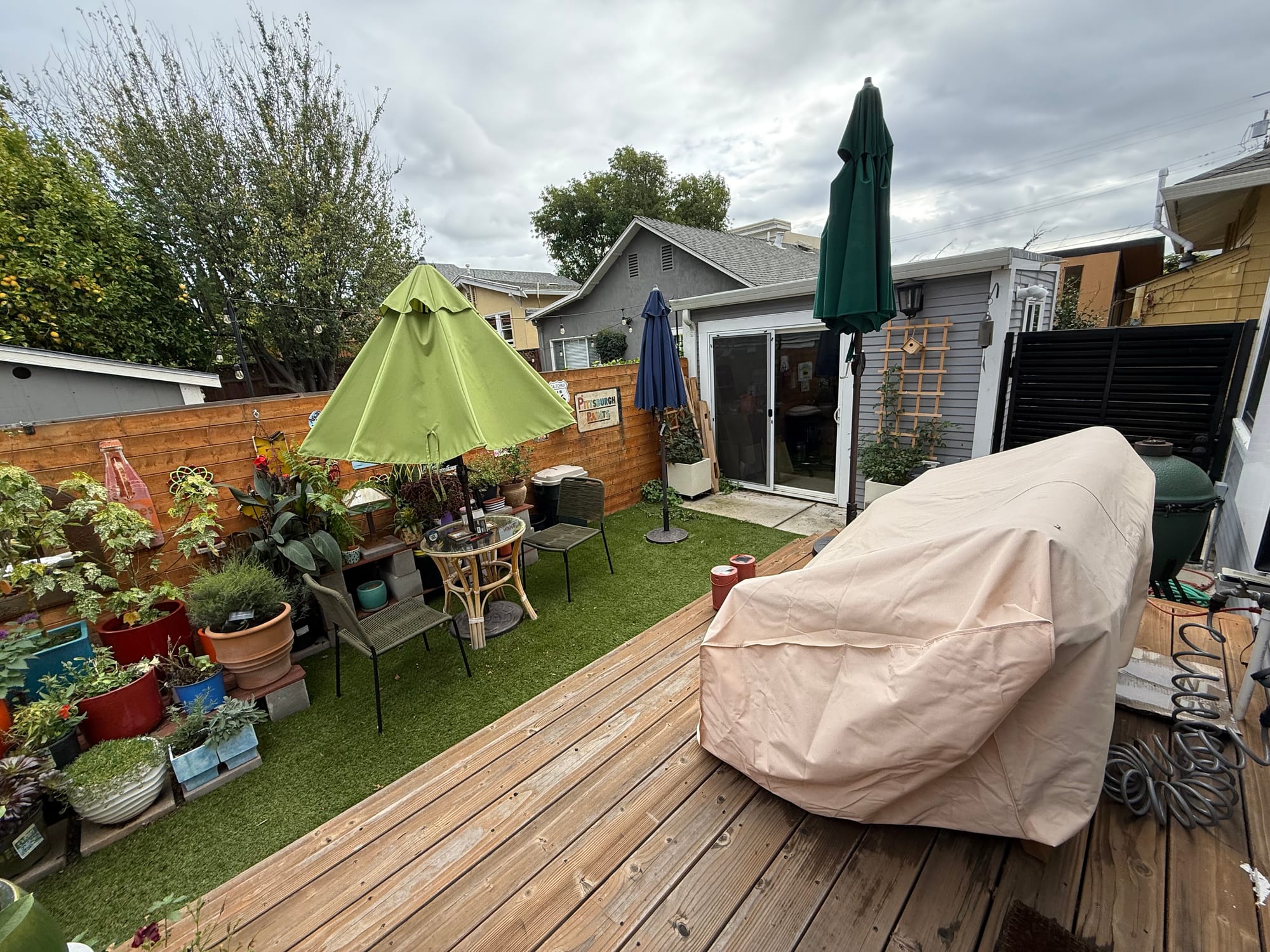
I lived in San Jose with my partner in the same house for 33 years. He died suddenly just before the pandemic in November 2019. I had rented studio spaces in San Jose over the years and usually had somewhere around 400 square feet in former canneries. In trying to work out how my life would go forward, I made home upgrades. To speed up the process, I elected to move out. I had been interested in the East Bay and decided to rent an Airbnb, and by luck, it was in the Temescal area of Oakland.
Long story short, I fell in love with this area, sold the San Jose property, and bought a home in Temescal. I wanted a home with an on-site studio. With less space available to me, I have reduced the size of the work I produce by quite a lot. I like to think that my paintings and drawings are little jewels. It has been an adjustment, but I find that it is working for me.
How do you interact with the environment outside your studio?
I feed pistachios to neighborhood crows and jays. They are relaxing around me some now. It’s great. I’ve engaged with NIAD in Richmond and Kala Art Institute in Berkeley.
What do you love about your studio?
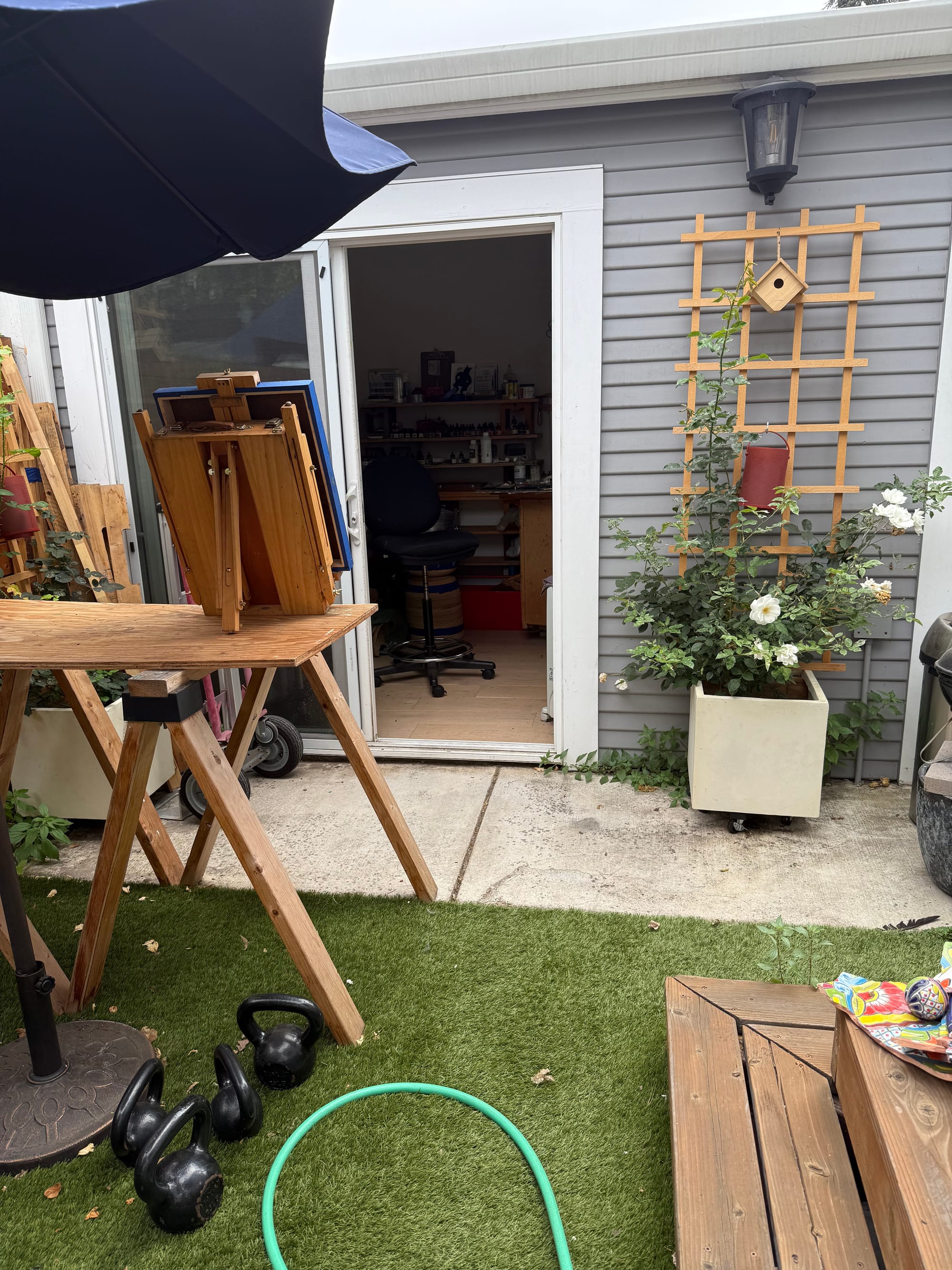
It’s mine. I don’t have to deal with a building manager anymore. I can work outside most days.
What do you wish were different?
I don’t think I have an answer for this question. It has taken quite a while to accept my life without my partner of 39 years, but I find many reasons to smile these days.
What is your favorite local museum?
The Oakland Museum is a fine institution. Then, of course, there is San Francisco.
What is your favorite art material to work with?
I bounce back and forth between oil paints and various inks. I can’t say enough about Sennelier’s shellac-based inks!
dinosaur_comics_feed| archive - contact - sexy exciting merchandise - search - about |

| ← previous | May 22nd, 2026 | next |
May 22nd, 2026: If we look at how "$" is pronounced there may be some clues we can use here. – Ryan | ||
Why I Removed Cesar Chavez From My Show
May. 22nd, 2026 10:00 amhyperallergic_feedIn three and a half decades as a curator, Elizabeth Ferrer had never faced the need to remove an artwork from an opened exhibition. But a month after she inaugurated a major show of Chicano photography at The Cheech in California, which included a 1969 portrait of Cesar Chavez, horrific allegations of sexual assault against the labor leader hit the front pages of national newspapers. Today in Hyperallergic, Ferrer writes candidly about historical revision, a delicate curatorial calculus, and having to make “a decision I could live with.”
If you're in New York, don't miss Roberto Lugo's new sculptural series, an ode to Puerto Rico rising joyfully from the urban meadow that is Madison Square Park. Staff Writer Isa Farfan spoke to the artist about his vision for the public artwork (and got some really cute photos with his parents). Cue Bad Bunny’s NUEVAYoL.
Catch up on industry news with Art Movements, get smart with Required Reading, and read our review of a new Richard Avedon documentary that premiered at the Cannes Film Festival.
—Valentina Di Liscia, senior editor
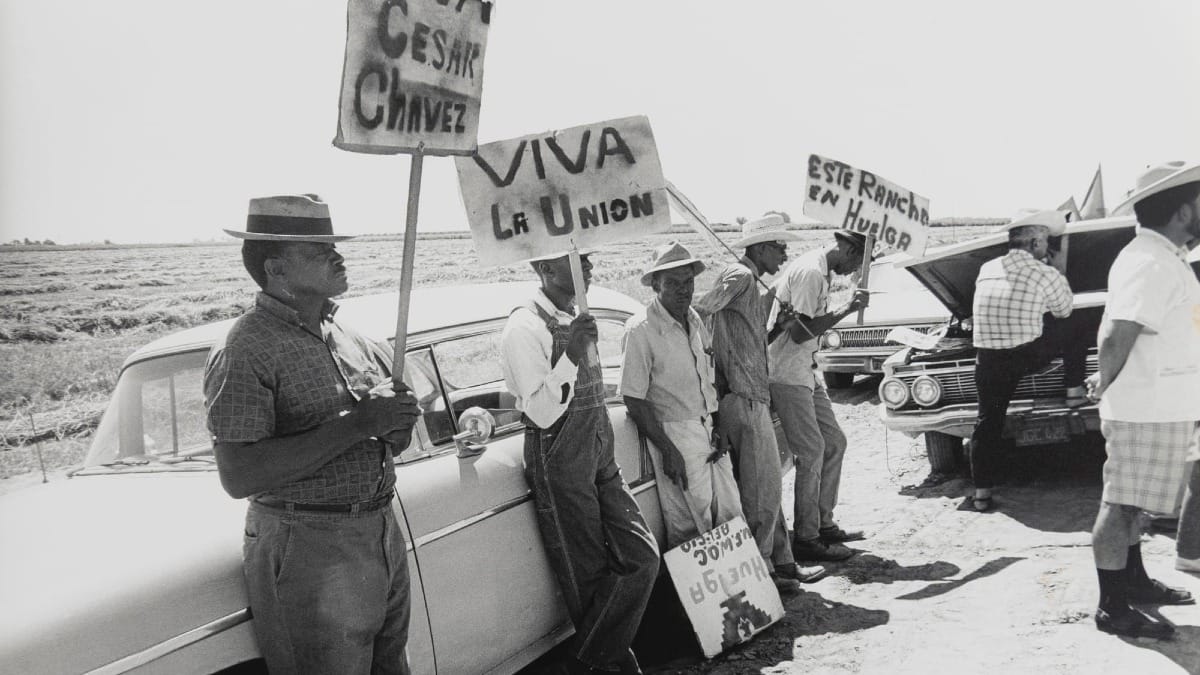
I’m a Chicana Curator. This Is Why I Removed Cesar Chavez From My Show
The decision to remove a portrait of the labor leader from “Chicano Camera Culture” at The Cheech was not one I took lightly. | Elizabeth Ferrer
Read More
SPONSORED
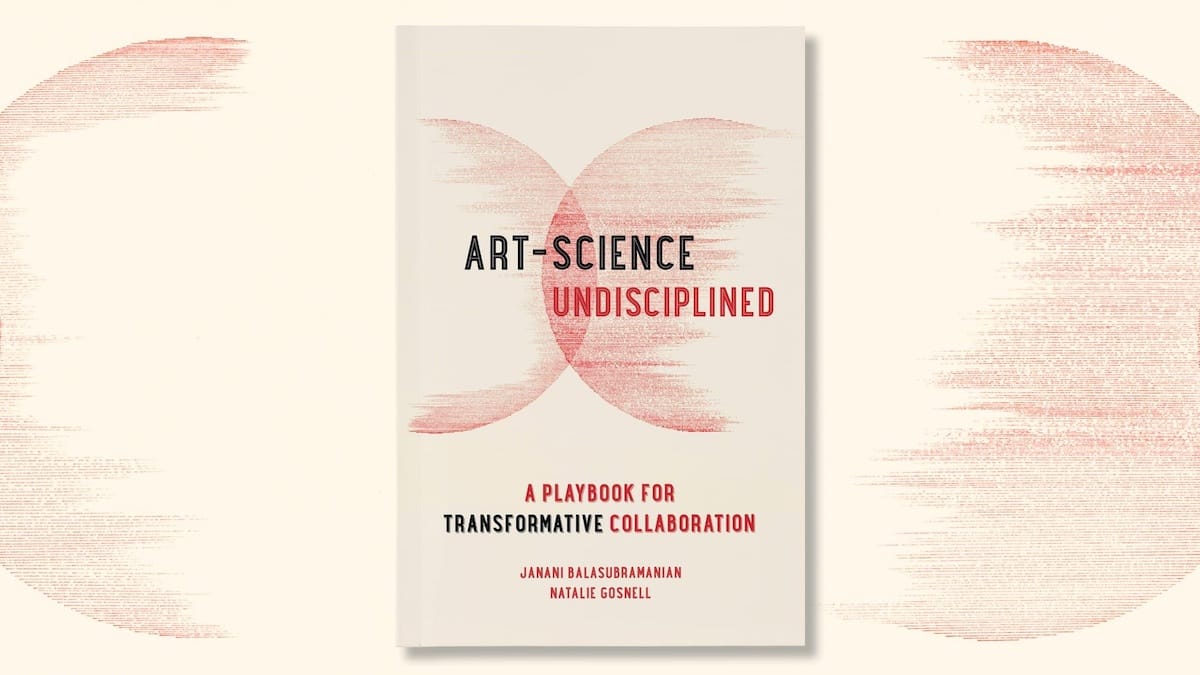
Art-Science Undisciplined: A Playbook for Transformative Collaboration
Artist Janani Balasubramanian and astrophysicist Natalie Gosnell reimagine collaboration through a values-based and joyfully undisciplined practice.
News
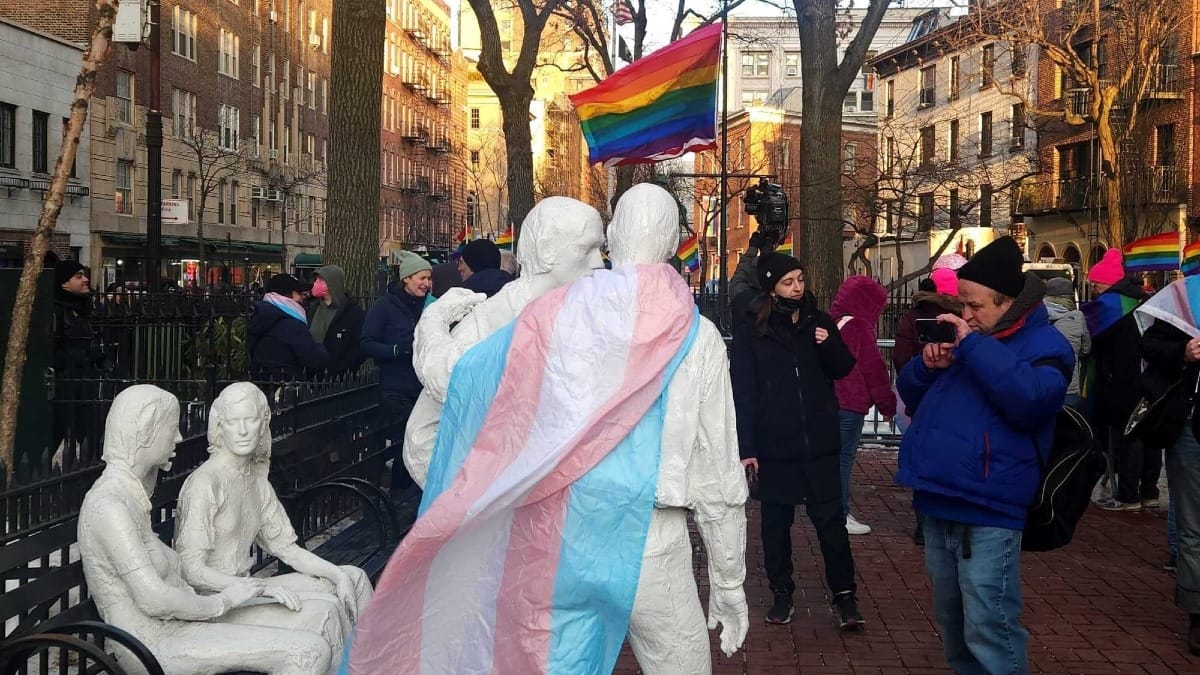
- The Stonewall National Monument was named one of the most endangered places in the US in an annual list put out by the National Trust for Historic Preservation.
- Roberto Lugo’s newly unveiled sculptures in Madison Square Park are a majestic tribute to Puerto Rico, his parents, and notable figures like Bad Bunny.
From Our Critics
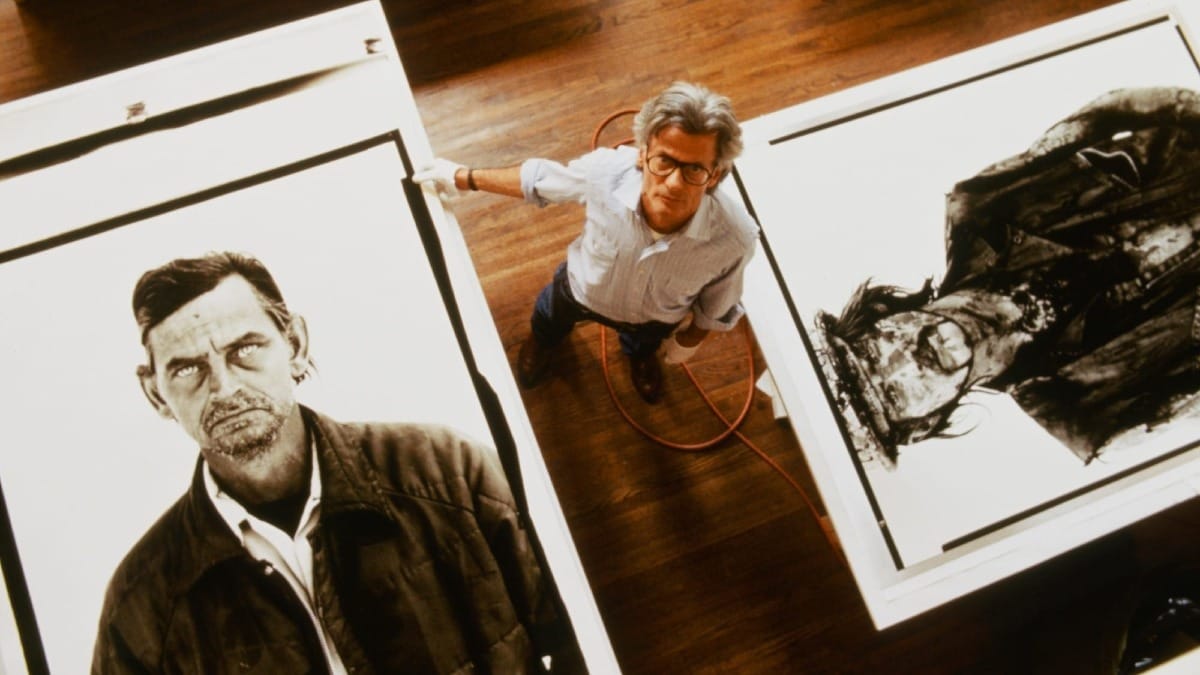
A New Richard Avedon Documentary Lets Him Down
Director Ron Howard is a gun for hire, and it shows in this conventional documentary about the famed photographer. | Dan Schindel
Read MoreCommunity
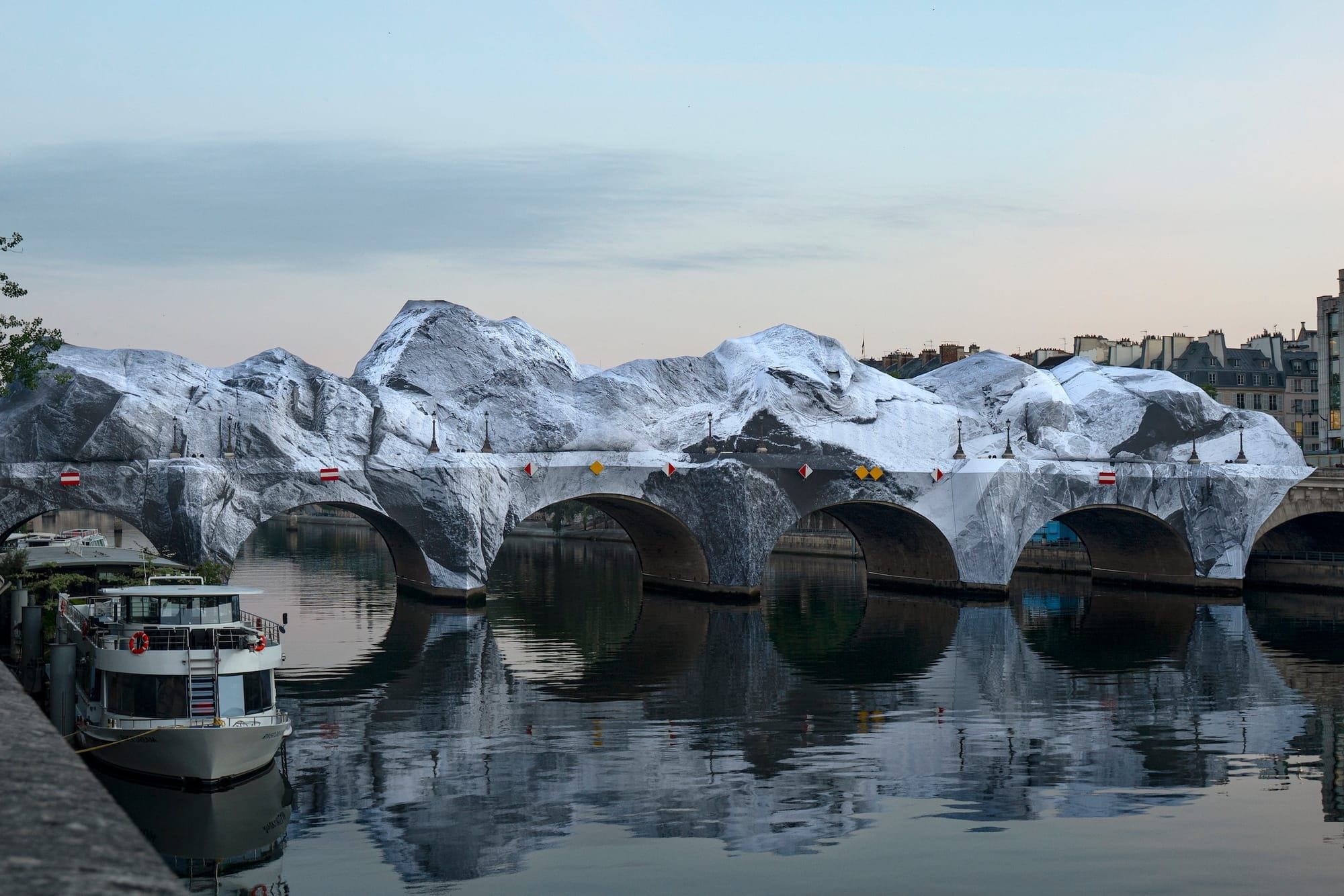
Required Reading
This week: a mysterious LA guerrilla artist, Whistler and gold paint, remembering Totó La Momposina, the art of photographing queer nightlife, AI agents turn Marxist, and more.
Read MoreArt Movements: Larry Gagosian Heads to the Big Screen
The enigmatic art dealer gets the documentary treatment, Pace gets the Brancusi Estate, the Louvre’s new architects, and other industry news.
Read MoreMember Comment
"Would like to see the Sarah Lucas sculpture bookended by an equally bulbous male balloon figure with comparably prominent anatomy, seated atop a toolbox."
Mary Lucier on Who’s That Nude Figure on a Washing Machine Outside the New Museum?
From the Archive

Welcome to “It’s the Arts,” with Monty Python
It’s the Friday afternoon before Memorial Day Weekend, which means, if you’re anything like me, your brain is somewhere out the window. Why not indulge its wandering weirdness with some Monty Python? | Jillian Steinhauer
Read More